
Last updated October 15, 2026
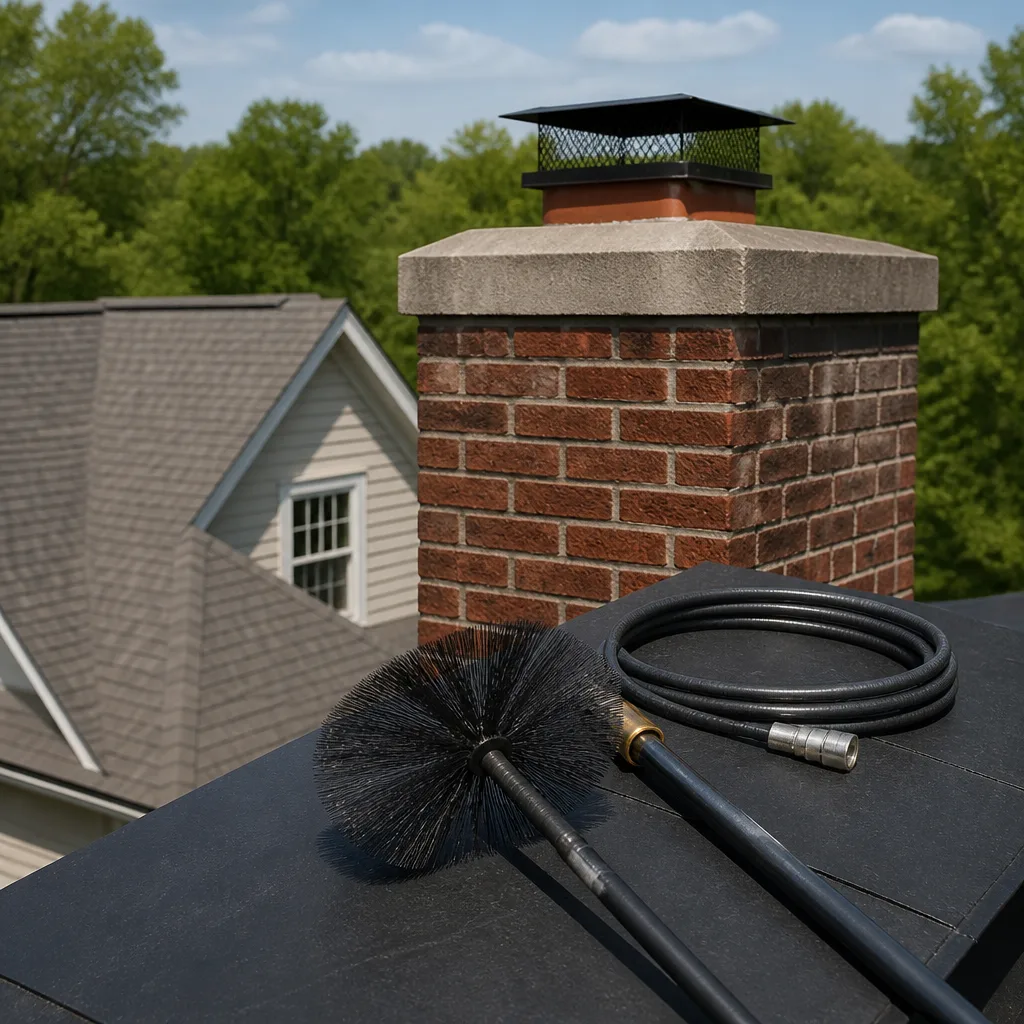 Sweep & inspection
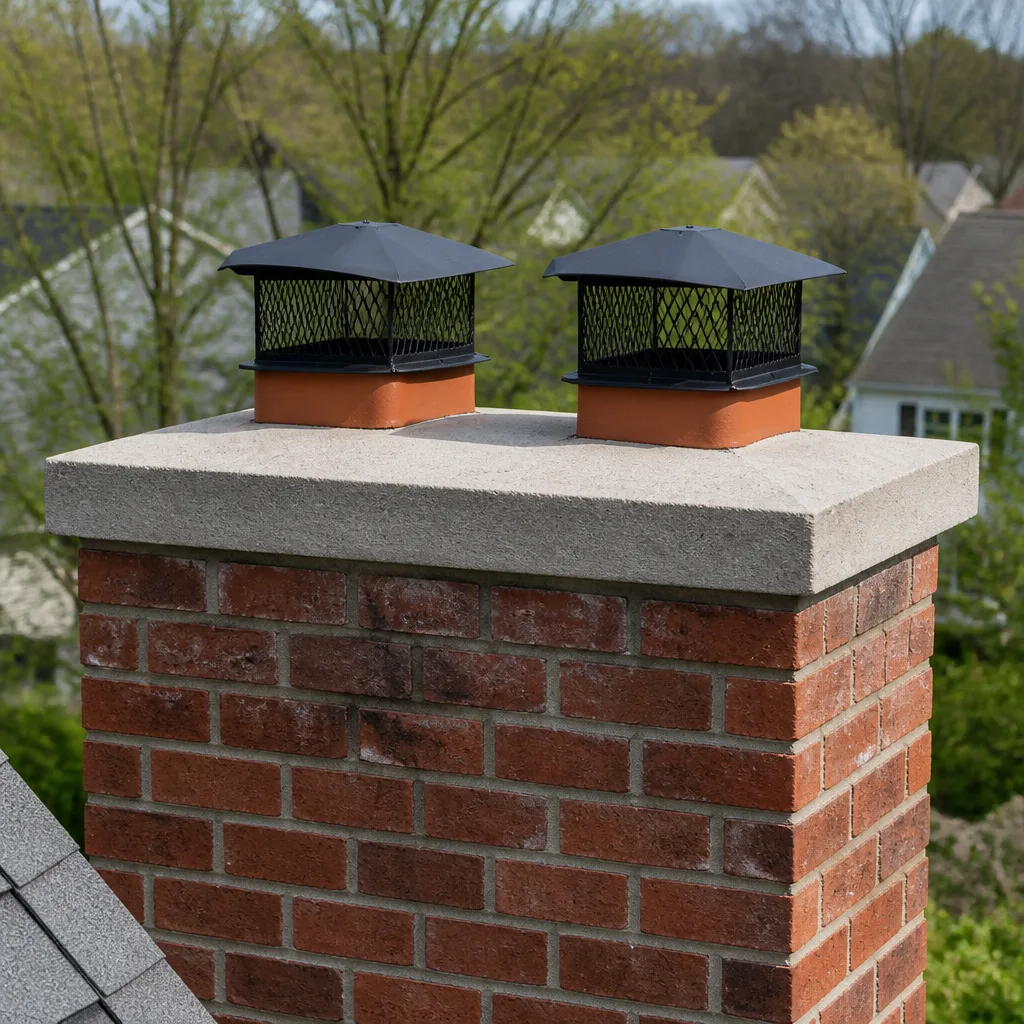 Caps & crowns
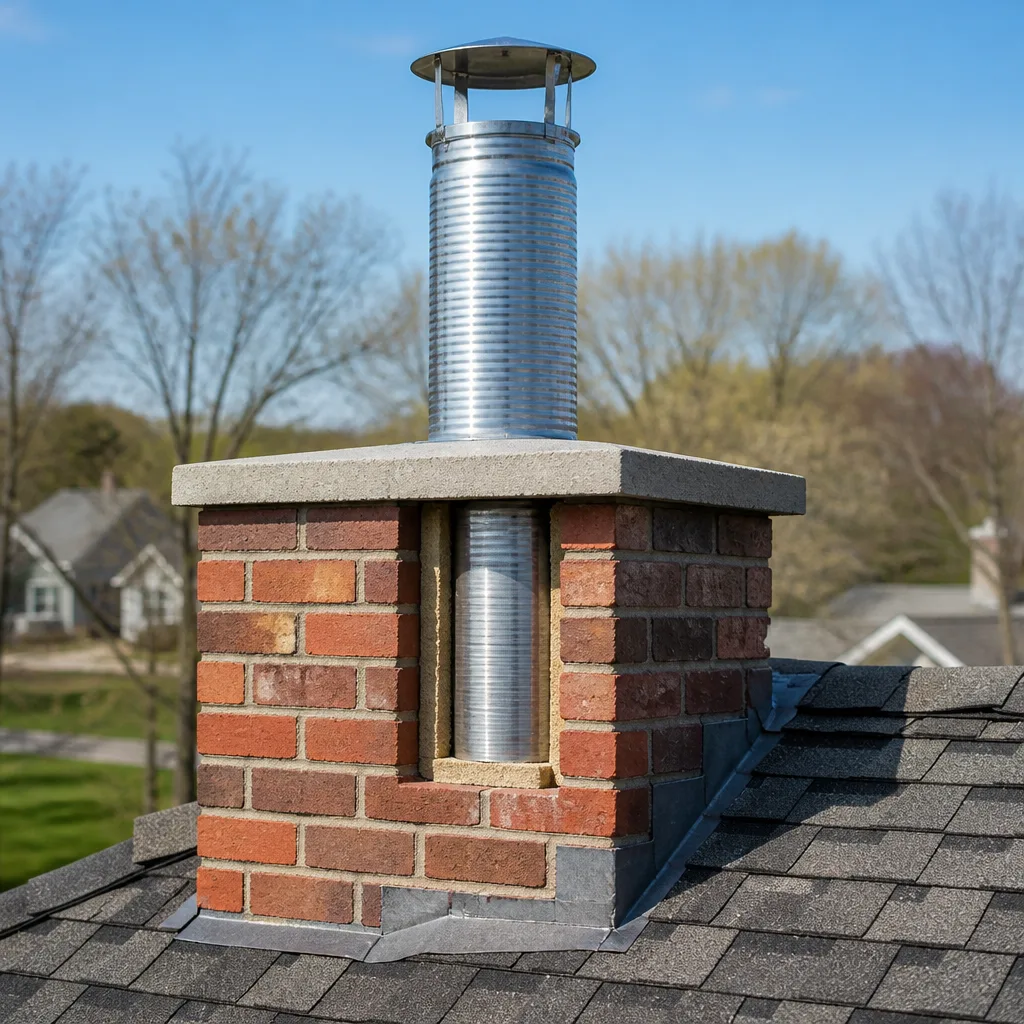 Flue relining
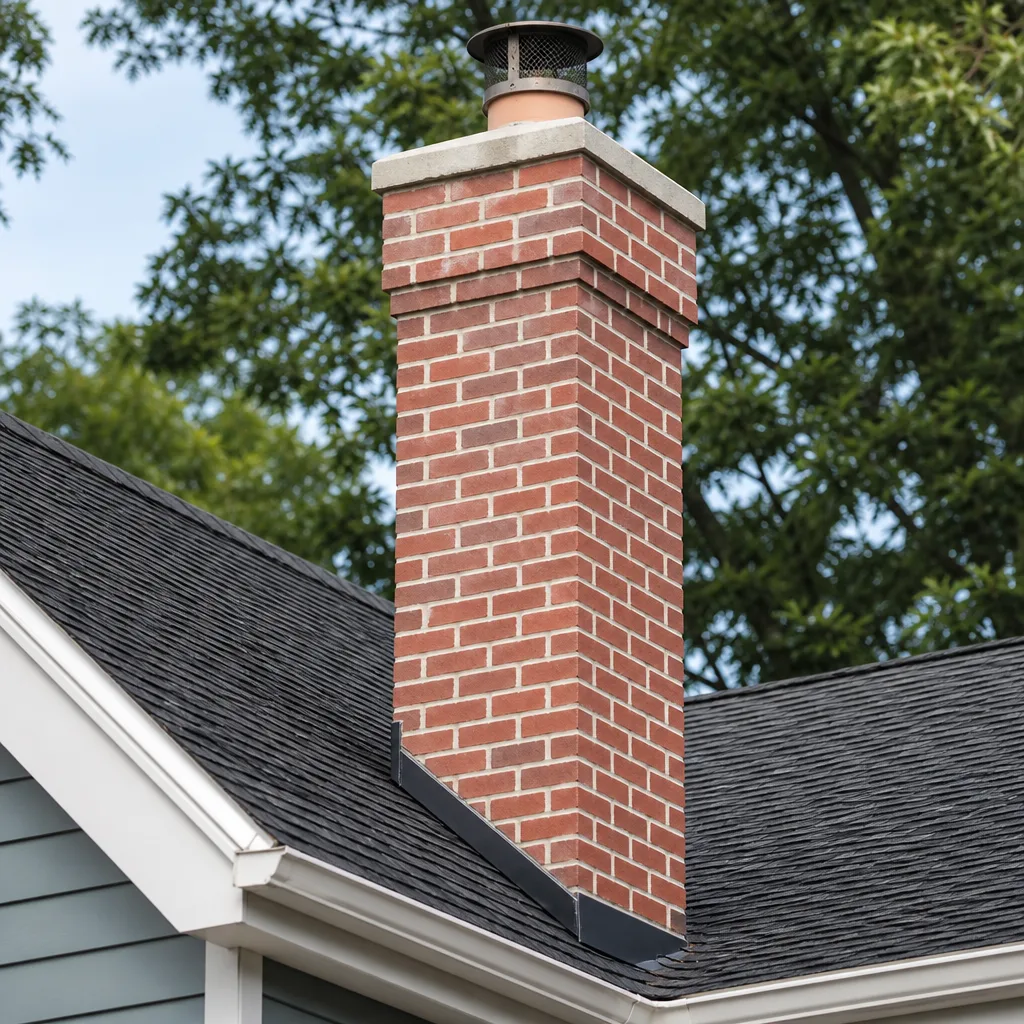 Masonry repair
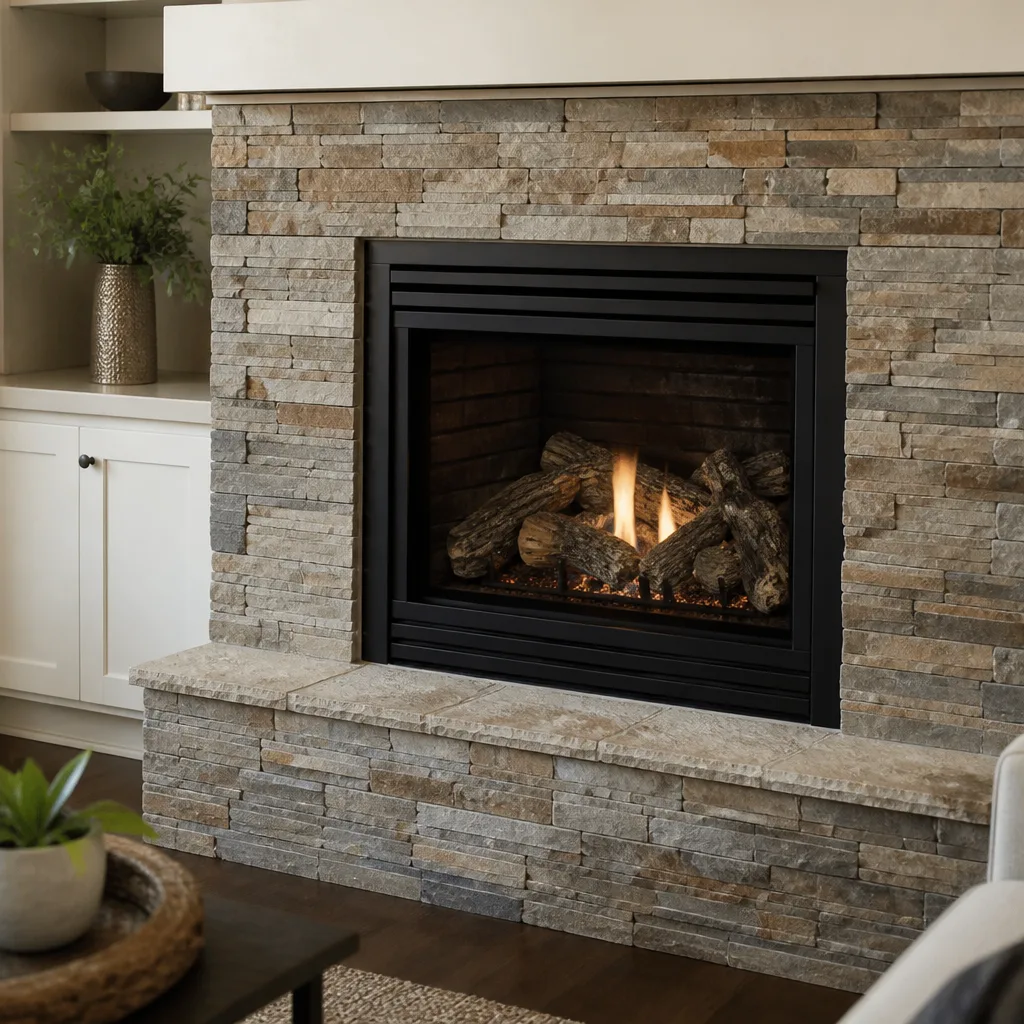 Gas fireplace service
Level 1 sweep and inspection to the NFPA 211 annual standard - flue, crown, cap, and flashing checked and photographed
Chimney sweep logs do not sweep chimneys. They loosen some creosote - which then falls where a brush and vacuum still have to collect it.
Seasonal Chimney Cleaning Care for Los Angeles: Year-Round Homeowner’s Guide
The fire that starts inside a Los Angeles chimney on the first cold night of November is almost always one lit in a flue that’s been open to the outdoors, unprotected, for seven months straight. That’s the reality of owning a fireplace in a city with a nine-month warm season. LA doesn’t have four chimney seasons the way Boston or Chicago does. It has two: a long dormant period and a short active window, and the transition between them is when most preventable problems occur. This guide covers the actual Los Angeles chimney calendar, the risks your flue faces during months you’re not using it, and the two-minute check that prevents the majority of smoke-rollback calls. Written by the team at Ashby Chimney Los Angeles home, we’ll walk you through what to do every season of the year.
Quick Answer
Seasonal chimney care in Los Angeles means two essential jobs per year: a pre-season inspection and sweep in September before the first fire, and a post-season closeout in March when you’re done burning for the year. Between those two points, most LA chimneys sit idle for six to seven months, and the biggest threats during that stretch are uncapped flues, roof rat and bird nesting, marine layer moisture, and Santa Ana wind damage. A professional Chimney Sweep in Los Angeles typically costs $180 to $340, and a good sweep fixes most problems before they become expensive repairs.
Styles & brands we work with
Table of Contents
- The Real LA Chimney Calendar: Two Seasons, Not Four
- September: Pre-Season Inspection Before First Use
- March: Post-Season Closeout and What to Check
- Summer Idle Risks: Roof Rats, Swifts, Starlings, and Marine Layer Moisture
- Santa Ana Winds and Chimney Cap Integrity
- The Two-Minute Check Before the First Fire
- How Often Should You Really Sweep a Chimney in Los Angeles?
- Common Mistakes to Avoid
- When to Call a Professional
- Frequently Asked Questions
- The Bottom Line
The Real LA Chimney Calendar: Two Seasons, Not Four
Most chimney care advice you’ll find online assumes a northern climate. Sweep in the fall before heavy use. Check for creosote buildup in January after the holidays. Inspect in spring after snow melt. None of that maps to Los Angeles. We don’t get snow. We don’t burn all winter the way a Minneapolis homeowner does. What we get is a fireplace that sits unused from roughly late March through early November, then gets lit every night for two to three months. That long idle stretch is not neutral time. It’s when rodents move in, moisture seeps in, and Santa Ana winds test every seal and cap on your roof.
Here’s the Los Angeles chimney year, the way we actually see it in the field:
- November to February: Active burning season. Cool nights, holiday fires, occasional all-day burns during cold snaps. Creosote accumulates.
- March: The switch. Most LA households stop burning. This is the moment to close out properly.
- April to August: Long idle season. Roof rats nest in uncapped flues, starlings and swifts build in chimneys, marine layer moisture sits on mortar joints in coastal neighborhoods from Santa Monica to Pacific Palisades.
- September to October: Transition back. Santa Anas begin. First cold fronts arrive. This is when you prep for burning season.
The homeowners who have problems are the ones who treat September like any other month and light a fire in November without looking at anything or watching for chimney cleaning warning signs. By then, seven months of neglect have stacked up, and the first fire can turn a small problem into an expensive one.
September: Pre-Season Inspection Before First Use
September is the single most important month on the Los Angeles chimney calendar. It’s warm enough to schedule work comfortably, dry enough for masonry and liner repairs to cure properly, and early enough that you’re not competing with every other homeowner during the November rush. If you do one thing this year, make it the September inspection.
A pre-season inspection catches everything the idle months have done to your flue. Here’s what a typical September visit involves:
- Visual inspection of the flue interior: We run a camera up the flue to check for creosote buildup, cracked tiles, and any animal activity from the summer. Nothing gets recommended without camera evidence you can see for yourself.
- Chimney cap check: Santa Anas loosen caps. So do climbing rats. A loose cap is an open door to rain, debris, and the next round of wildlife. We check the cap, the spark arrestor screen, and the mounting hardware.
- Mortar and brick inspection: Cracks that opened during the hot dry summer get worse fast once the first rains arrive. We’re looking for spalling brick, deteriorated mortar joints, and any movement in the chimney stack.
- Damper function test: A sticky damper is an annoyance in November and a carbon monoxide risk if it sticks closed. We open, close, and lubricate as needed.
- Sweep if needed: If the previous burning season left enough creosote to warrant it, we sweep now, before you’re trying to schedule in the middle of holiday season. Most sweeps in Los Angeles run between $180 and $340 depending on chimney height, accessibility, and how long it’s been since the last sweep.
If you skip the September check and go straight to lighting a fire in November, you’re gambling that seven months of Santa Anas, rat activity, and coastal damp didn’t do anything. We’ve been called to more first-fire-of-the-season smoke rollbacks than any other single type of call. Almost all of them would have been caught by a simple pre-season inspection at Chimney Inspection in Los Angeles.
March: Post-Season Closeout and What to Check
When the nights start staying above 55 degrees and the fireplace goes dark for the season, most homeowners just stop thinking about it. That’s a mistake, because the way you close out the burning season sets up what you’ll face in the fall. March is the second-most important month on the LA chimney calendar.
Here’s the post-season closeout routine we recommend:
- Have the chimney swept if you burned regularly. Creosote doesn’t disappear in summer. It sits there, absorbing moisture from the marine layer, and becomes more corrosive over time. A post-season sweep in March or April removes creosote while it’s still fresh and easier to remove, before it bakes hard during the long dry stretch.
- Close the damper, but not completely. Here’s a counterintuitive one. If you seal the damper tight all summer, you trap moisture inside the flue, and that trapped moisture does more damage in a coastal climate than leaving a small air gap. Close the damper so it’s mostly shut, but don’t expect an airtight seal. Some airflow is good.
- Verify the cap is still secure. Santa Ana season usually runs through March, and the wind may have already loosened your cap. Check from the ground with binoculars, or have it checked during the sweep. A $40 cap replacement now beats a $400 animal removal in July.
- Look for signs of water intrusion. Stains on the ceiling near the chimney, efflorescence (white mineral deposits) on the brick face, or rust on the damper assembly are all indicators that water got in during the wet season. Catching this in March gives you all summer to schedule a repair before burning season returns.
Close out properly in March, and your September inspection becomes quick and routine. Skip it, and you’ll be dealing with whatever accumulated over the summer the next time you want a fire.
Summer Idle Risks: Roof Rats, Swifts, Starlings, and Marine Layer Moisture
Los Angeles has a distinct set of off-season chimney threats that you won’t find in most chimney guides. The big three are animals, moisture, and wind. Here’s what each one looks like in an LA context.
Roof Rats (Rattus rattus)
Roof rats are the most common chimney invader in the Los Angeles basin. These rats are climbers. They scale stucco walls, tree branches, and utility wires to reach rooftops, and an uncapped chimney is a luxury condo to them. They’re active year-round in LA but are most likely to seek shelter during the coolest months, which means they’re often investigating chimneys in late fall, right when you’re thinking about lighting the first fire. A chimney cap with a 3/4-inch mesh spark arrestor screen is the only reliable deterrent.
Chimney Swifts and European Starlings
Chimney swifts historically nested in hollow trees, but they’ve adapted to chimneys, especially uncapped masonry flues. They’re protected under the Migratory Bird Treaty Act, which means once they nest, you legally cannot remove them until the young have fledged. European starlings are not protected in the same way, but they’re more aggressive nesters and will return to the same chimney year after year if it’s not capped. Starling nesting season in Southern California typically runs March through July, so by the time you smell the nest or hear the chicks, you’re legally or practically stuck waiting them out, which is why understanding chimney cleaning permits, codes & inspections in CA matters before you act. The time to install a cap is before nesting begins, not after.
Marine Layer Moisture
Chimneys in Santa Monica, Venice, Pacific Palisades, Playa del Rey, and other coastal neighborhoods deal with something inland homeowners don’t: nightly marine layer fog that saturates exposed masonry. That moisture seeps into porous brick and mortar, and over the course of a summer, it accelerates deterioration. Mortar joints break down. Clay flue liners crack. Metal dampers rust. The same chimney in Sherman Oaks and Santa Monica will age completely differently due to the marine layer alone. If you live within three miles of the coast, an annual inspection is more important for you than it is for someone in Pasadena.
What About Creosote in Summer?
A common misconception is that creosote only matters during burning season. Actually, creosote is hygroscopic, meaning it absorbs moisture from the air. In coastal neighborhoods, humid summer air enters the flue condenses on creosote deposits, and creates an acidic environment that speeds corrosion of steel liners and deterioration of clay tiles. This is why a March sweep is worth doing: you’re removing the creosote before it spends five months soaking up coastal moisture.
Santa Ana Winds and Chimney Cap Integrity
Santa Ana wind season runs roughly October through March, which means it overlaps directly with fireplace season in Los Angeles. That overlap creates a specific risk most homeowners never think about: high winds can shift or dislodge a chimney cap right when you’re about to be burning every night.
Here’s what Santa Anas do to chimneys, and why it matters for two different reasons at two different times of year:
- In October and November: Strong gusts can loosen cap mounting hardware, tear spark arrestor screens, or completely lift caps off the flue. If you light a fire under a damaged spark arrestor screen, you’re sending embers out of the top of your chimney into dry Santa Ana winds, which is a genuine fire risk in Los Angeles hillside neighborhoods like Laurel Canyon, Sherman Oaks foothills, and anywhere in the Santa Monica Mountains interface. If your cap is already loose when you light the first fire of the season, the thermal updraft can push it off entirely.
- In February and March: Late-season Santa Anas are often the strongest, and they hit when your cap has already taken a season of heat cycling. This is when we see the most cap failures in the field. The failure itself may not be apparent until the following fall, which is why a March closeout inspection matters.
- Cap mounting hardware: Most caps are held in place with metal screws or a compression fit. Over time, the expansion and contraction of the flue tile from heat, combined with wind vibration, loosens the connection. We check cap security on every inspection, but we especially emphasize it during Santa Ana season because that’s when a marginal cap becomes a missing cap.
- What to listen for: If you hear a rattling or scraping sound from your chimney during a strong wind event, that’s a loose cap or a detached spark arrestor screen. It won’t fix itself, and waiting just means more damage to the cap, the flue, or both.
If you’re in a wind-exposed area, which includes most of the hillsides and the inland valleys during Santa Ana events, schedule a cap check every fall. It’s the cheapest protection you can give your chimney.
See the difference
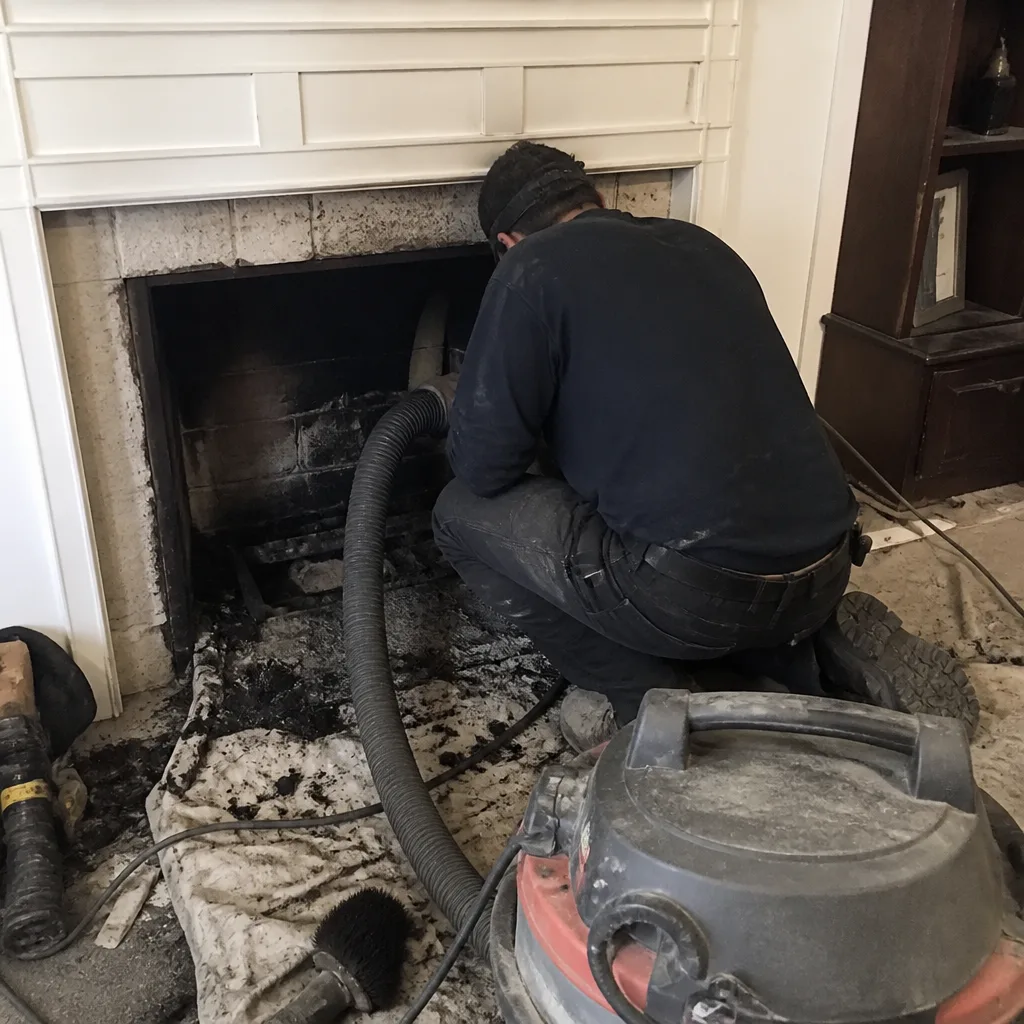 Before
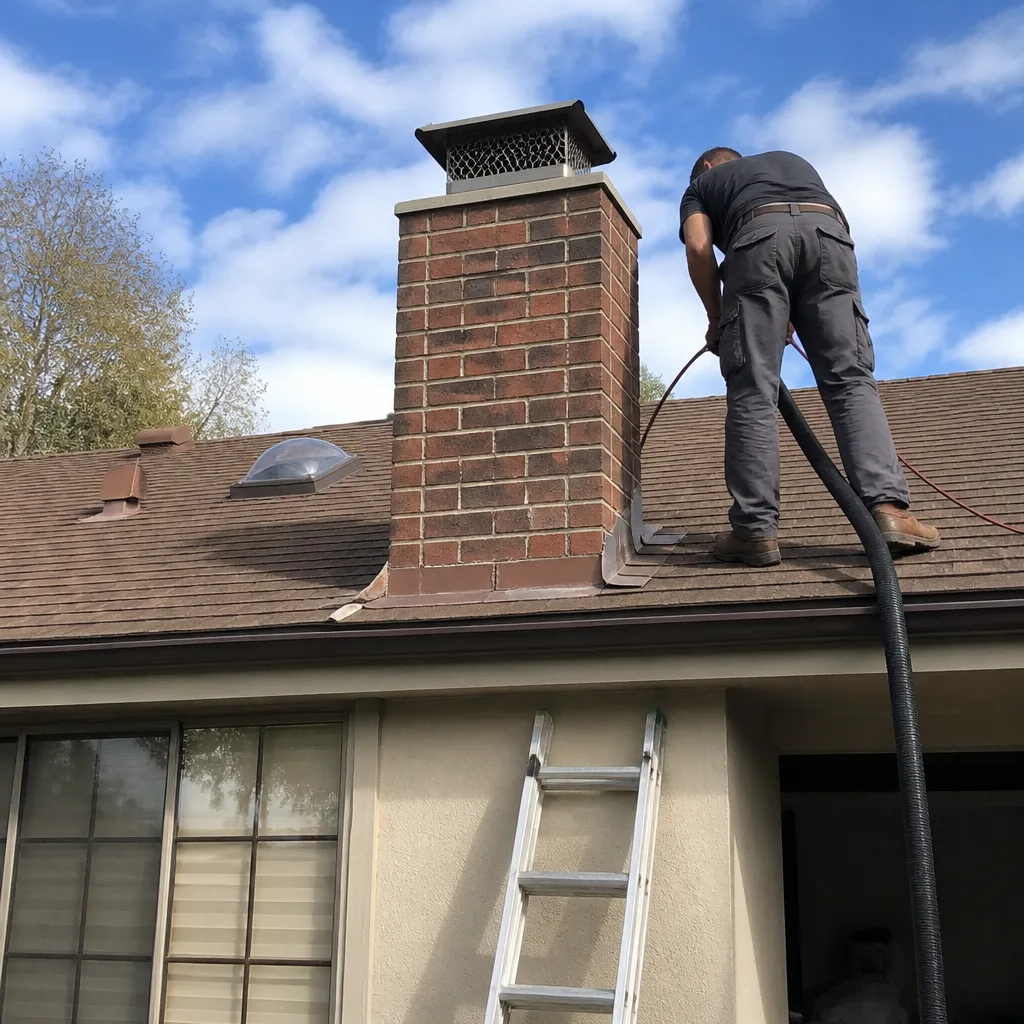 After
After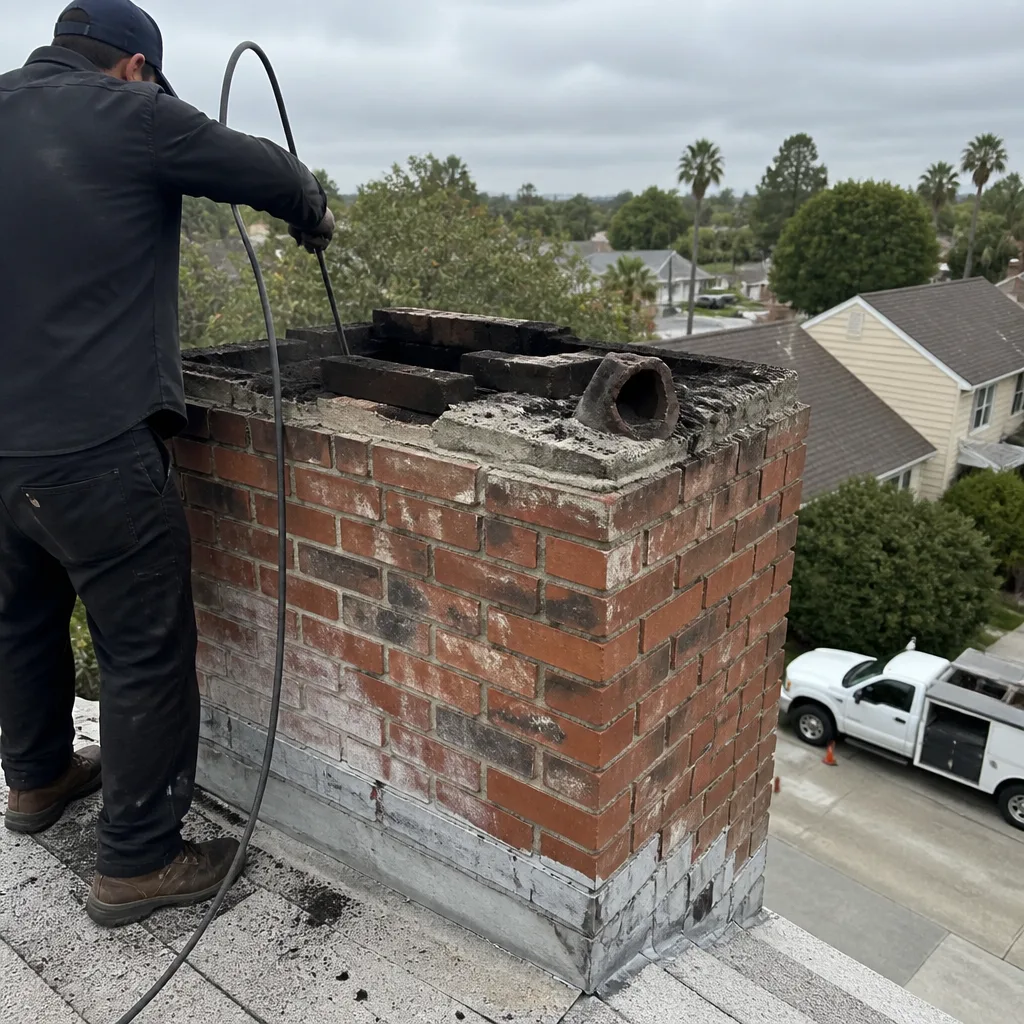 Before
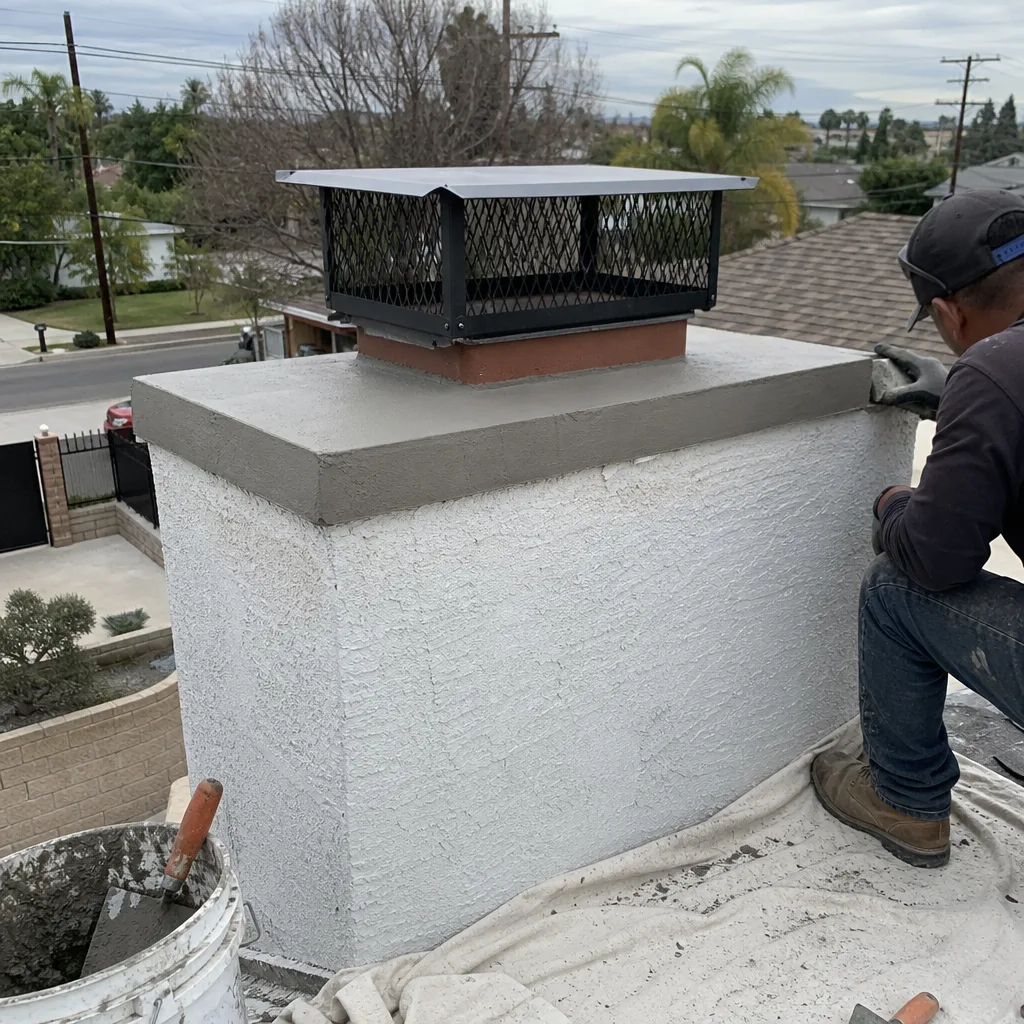 After
After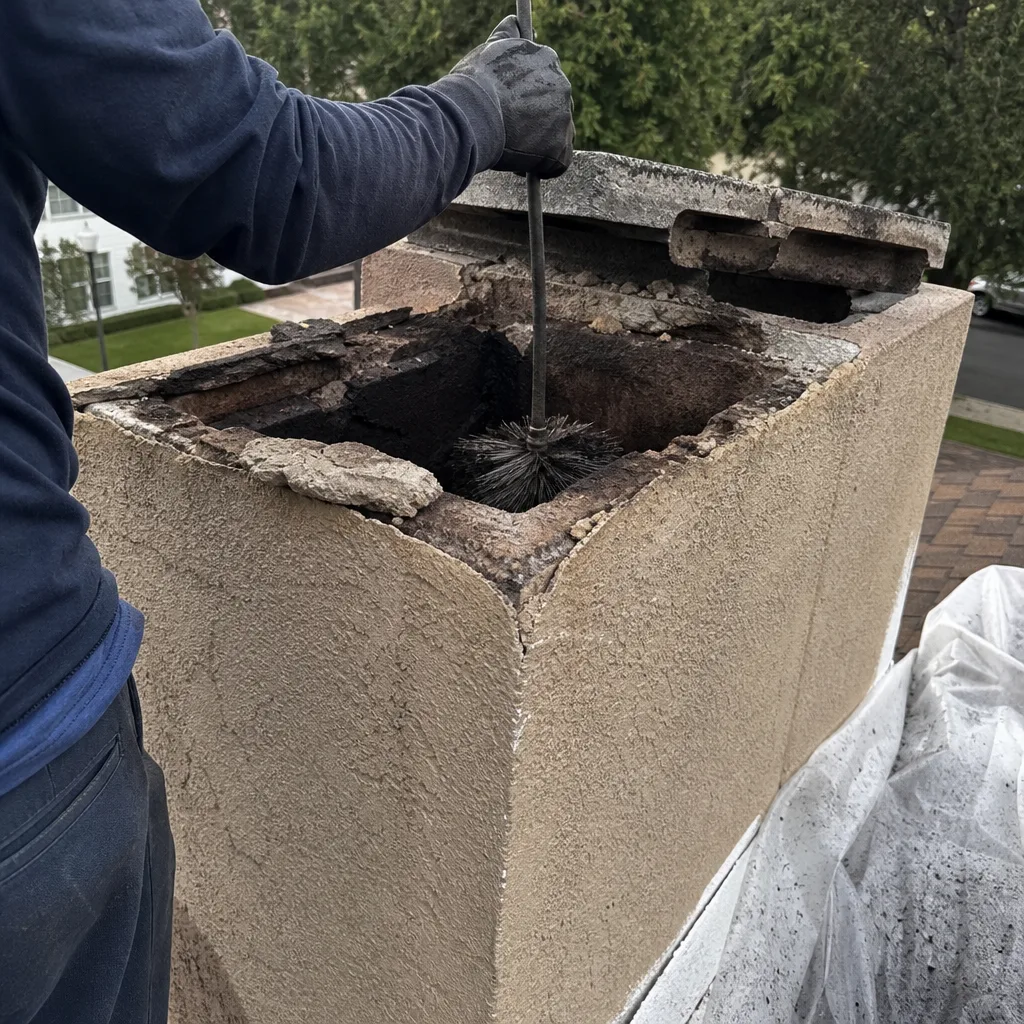 Before
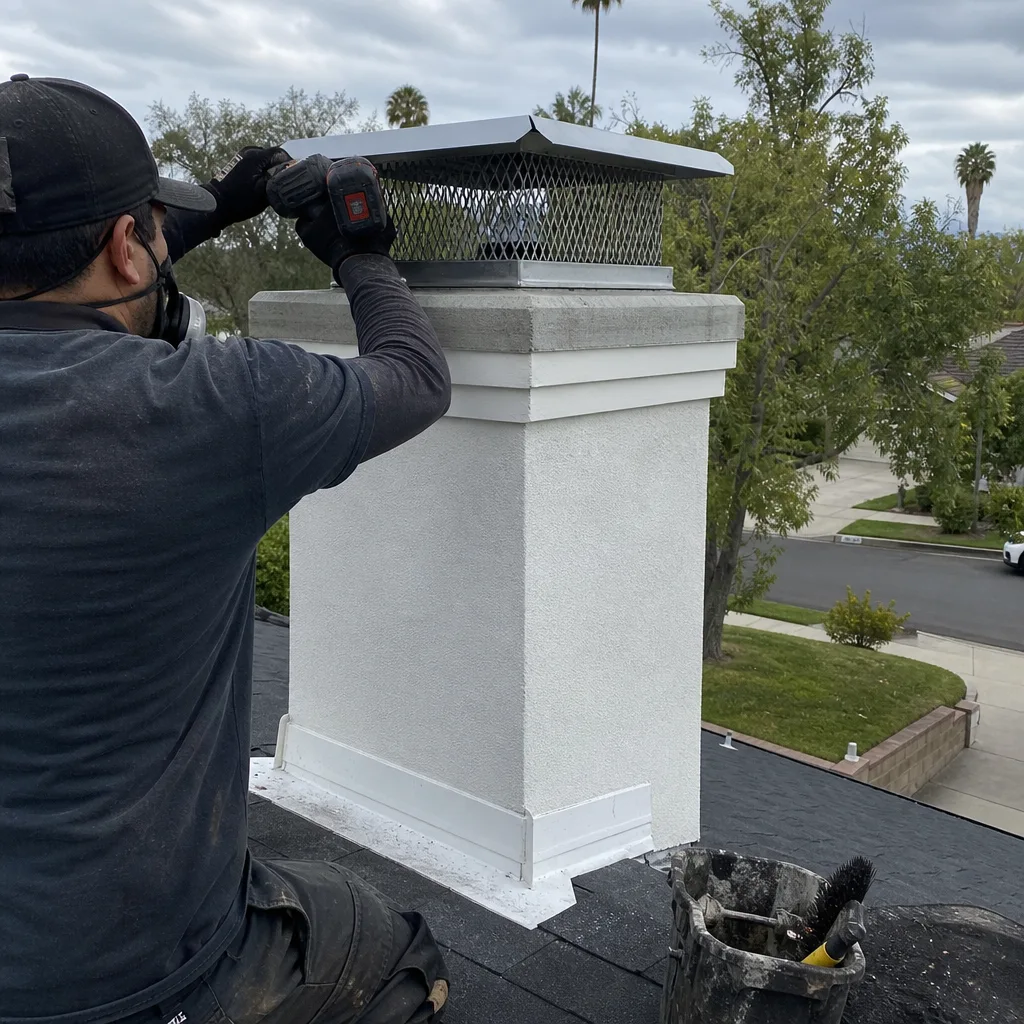 After
AfterThe Two-Minute Check Before the First Fire
Here’s the single most useful thing in this guide. Before you light the first fire of the season, do this two-minute check. It prevents the majority of smoke-rollback calls we get in Los Angeles every November.
- Open the damper fully and look up. Use a flashlight. You’re looking for daylight, which means the flue is open and unobstructed. If you can’t see daylight, don’t light anything. You may have a closed damper, a partial blockage, or an animal nest. Call us.
- Check the damper position. Make sure the damper actually opens and closes smoothly. A damper that’s stuck partially closed will push smoke back into the room within minutes of lighting the fire.
- Look for debris in the firebox. Leaves, twigs, and rat droppings in the firebox mean something got through or around your cap. Clean out loose debris before lighting.
- Run your hand along the firebox walls. If you feel moisture or see water stains, that’s a moisture intrusion issue. Don’t light a fire until you know the flue is dry and sound.
This check takes two minutes and costs nothing, but it catches the big three smoke-rollback causes: closed damper, obstructed flue, and blockage from nesting animals. If you find anything concerning, that’s the time to call us at (213) 652-7061, not after the living room fills with smoke.
How Often Should You Really Sweep a Chimney in Los Angeles?
The old rule of thumb says sweep your chimney once a year, and for most Los Angeles homeowners that’s about right, with a caveat. Our burning season is shorter than in colder climates, but the volume of creosote you accumulate depends on what you burn and how often.
Here’s a practical guide based on what we actually see in LA homes:
- Occasional burners who use the fireplace fewer than 20 times per season, almost always with seasoned hardwoods: a sweep every other year is often sufficient, but an annual inspection is still the safe call.
- Regular burners who use the fireplace most evenings November through February: sweep annually, ideally in March or April after the season ends.
- Heavy burners who burn daily through the winter, especially if they burn softwoods like pine or eucalyptus: consider a mid-season check and a post-season sweep. Creosote accumulates much faster with pine and eucalyptus, which are common in Southern California.
- Homes built before 1980 with the original clay flue liner: annual sweep, no exceptions. Older clay liners with hairline cracks are more vulnerable to creosote ignition, and annual sweeping gives us a chance to see those cracks developing before they become a problem.
If you’ve recently moved into a home and don’t know the chimney’s service history, get it inspected before the first fire. We’ve seen too many LA homes where the chimney hasn’t been touched in a decade, and the seller didn’t mention it. A $250 sweep is cheap insurance against a chimney fire or a smoke-filled living room.
Common Mistakes to Avoid
- Lighting the first fire without checking the flue. Seven months of idle time is plenty for an animal to move in, a cap to loosen, or debris to collect. A two-minute flashlight check prevents most smoke rollback, but most LA homeowners skip it entirely.
- Assuming a chimney that wasn’t used can’t have problems. An idle chimney is often in worse shape than a regularly used one. Moisture works into the masonry, animals colonize the flue, and no one notices until the first attempt at a fire.
- Skipping the cap because “it looks fine from the ground.” Ground-level visual checks miss almost everything. A cap that’s shifted slightly from Santa Ana winds will look fine from forty feet away but fail to seal the flue. You need to get on the roof or have a technician do it.
- Burning unseasoned wood to save money. Green wood burns cooler and produces dramatically more creosote. It takes a full year for most firewood to season properly in LA’s climate, and the shortcut isn’t worth the creosote buildup.
- Waiting until November to schedule anything. Every chimney company in Los Angeles is booked solid in November and December. September and October are the sweet spot for pre-season work. March and April are the sweet spot for post-season work. The people who wait get to choose between paying weekend rates or missing the season’s start.
- Closing the damper tight all summer and forgetting about the flue. A flue that’s sealed tight all summer traps moisture, and trapped moisture is the silent killer of clay liners and mortar joints, especially in coastal neighborhoods. Leave the damper mostly closed but not airtight.
- Ignoring small water stains near the chimney. A water stain on the ceiling in August isn’t an emergency, but it’s a signal. By the time winter rains arrive, that small stain could be a full leak, and repairing a leaky chimney in December is never cheap.
When to Call a Professional
Some chimney work is genuinely DIY-friendly. Sweeping is not. Neither is cap replacement, liner repair, or any work that involves getting on the roof or working inside the flue. Here’s when you should call us: if your flashlight check reveals an obstruction or you can’t see daylight up the flue; if you notice water stains, efflorescence, or crumbling mortar; if you smell a musty or animal odor when you open the damper; if your chimney has never been inspected during your ownership; or if you’ve had smoke rollback issues in the past. Fireplace Repair in Los Angeles covers everything from damper replacement to liner work, and every job gets a written price before any work starts. Ashby Chimney Los Angeles offers free estimates throughout the LA area. Call (213) 652-7061 and we’ll schedule a visit.
Frequently Asked Questions
A standard chimney sweep in Los Angeles typically costs between $180 and $340, depending on chimney height, roof accessibility, and how long it’s been since the last cleaning, as detailed in our Chimney Cleaning Cost Breakdown: The Los Angeles Homeowner’s Reference for 2026. Homes with difficult roof access, multi-story flues, or heavy creosote buildup will land at the higher end. A sweep should include a basic camera inspection of the flue, and if it doesn’t, ask why. Call (213) 652-7061 for an exact quote for your home, estimates are free and always written down before work starts.
This is the question we hear most often from LA homeowners who’ve been quoted liner work. Here’s the straight answer: you should never accept a liner recommendation without seeing camera evidence of the damage for yourself. A cracked clay liner or a deteriorated steel liner will show up clearly on a camera feed, and any reputable chimney company will show it to you. If the recommendation comes without video evidence, get a second opinion. At Ashby Chimney Los Angeles, we don’t recommend liner work unless the camera shows a clear problem, and we’ll show you the footage before anyone asks you to write a check. Materials we use when liner work is genuinely needed include DuraFlex and HeatShield products, which are built for exactly this purpose.
For most LA homeowners, once a year is the right cadence, timed for March or April after the burning season ends. If you’re an occasional burner, every other year is often adequate. If you burn daily through the winter or burn softwoods like pine and eucalyptus, sweep annually without exception. The most important thing is the annual inspection, which catches problems regardless of how much you burn.
Three things, in order of likelihood. First, creosote builds up and becomes a chimney fire risk, and chimney fires in a cracked liner can spread into the house faster than most people realize. Second, roof rats or birds move in, and once they’re established, removal is expensive and sometimes legally complicated. Third, moisture intrusion from a failed cap or deteriorating mortar works its way into the home’s framing, which turns a $40 cap replacement into a multi-thousand-dollar repair. The cost of maintenance is trivial compared to the cost of neglect. Call (213) 652-7061 and get on the schedule.
You can, in theory, but for most people it’s not worth the risk or the mess. A proper sweep requires getting on the roof safely, running the right brushes, and doing a visual inspection of the flue afterwards. Most DIYers miss the cracks, the loose caps, and the animal entry points, which are the things that actually matter. And if you have a two-story home or a steep roof in the Los Angeles hills, the risk isn’t worth the savings. We’d rather see you spend $250 on a professional sweep than on an emergency room visit.
Get the chimney inspected before the first fire. This single action catches the great majority of problems that build up during the seven-month idle season: animal nests, moisture damage, Santa Ana wind damage, and creosote buildup from the previous winter. A September inspection gives you all of October to schedule repairs, and you’ll beat the November scheduling crunch that hits every chimney company in Los Angeles every single year. Call (213) 652-7061 and we’ll get you on the calendar.
The Bottom Line
Los Angeles doesn’t have four chimney seasons. It has two: the burning months and the idle months, and the handoffs between them are where problems live. The homes that need expensive repairs are usually the ones where nobody looked at the chimney between March and November. The homes that enjoy clean, safe fires year after year are usually the ones that scheduled a September inspection and a March sweep, kept the cap intact, and didn’t let small problems ride until they became big ones. That’s the whole game. Two checkpoints a year, a cap that works, and a healthy respect for what seven months of Southern California idle time can do to a flue. Questions about your chimney? Find more guides & resources on our blog, or call Ashby Chimney Los Angeles at (213) 652-7061. We answer the phone, we give written prices before we start, and we stand behind the work in writing, backed by the Kingswell Guarantee.
Written by Nathan Corliss, Owner at Ashby Chimney Los Angeles, serving Los Angeles since 2002.