
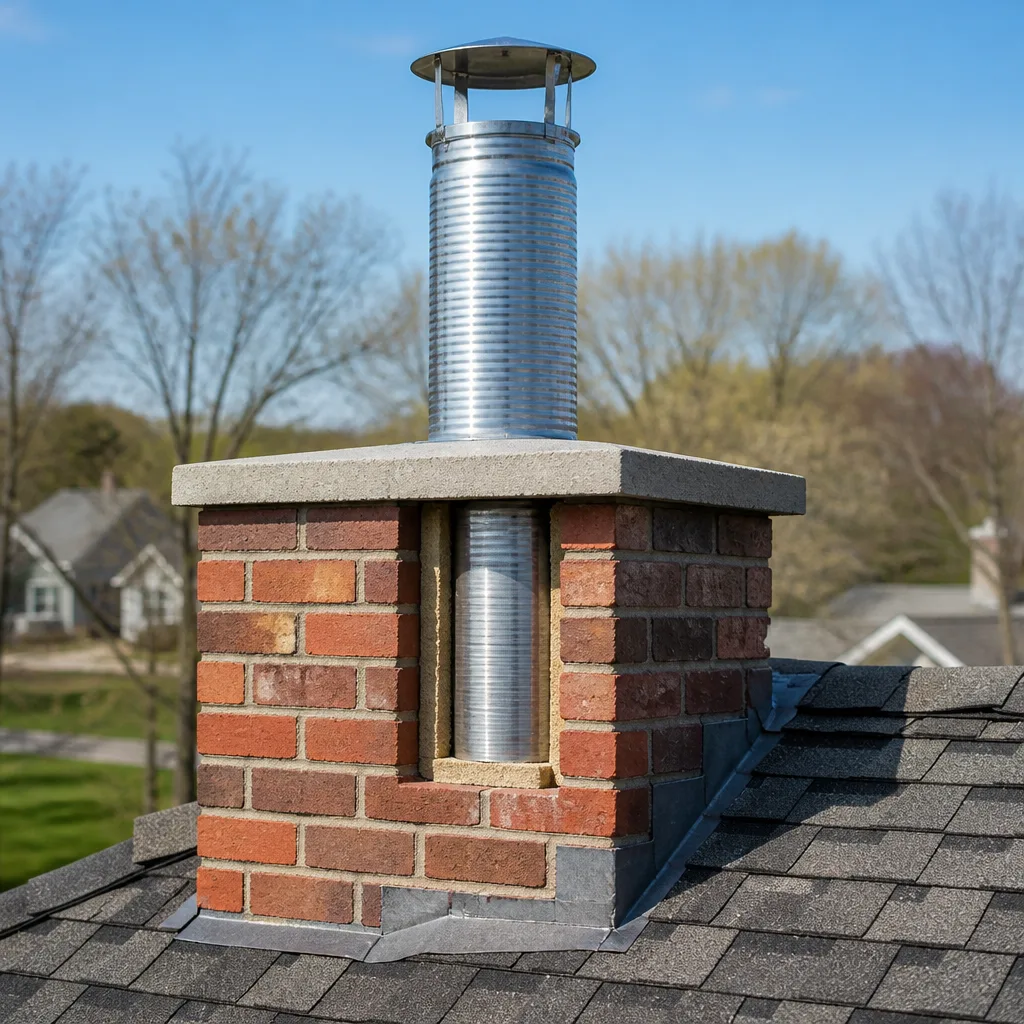
 Flue relining
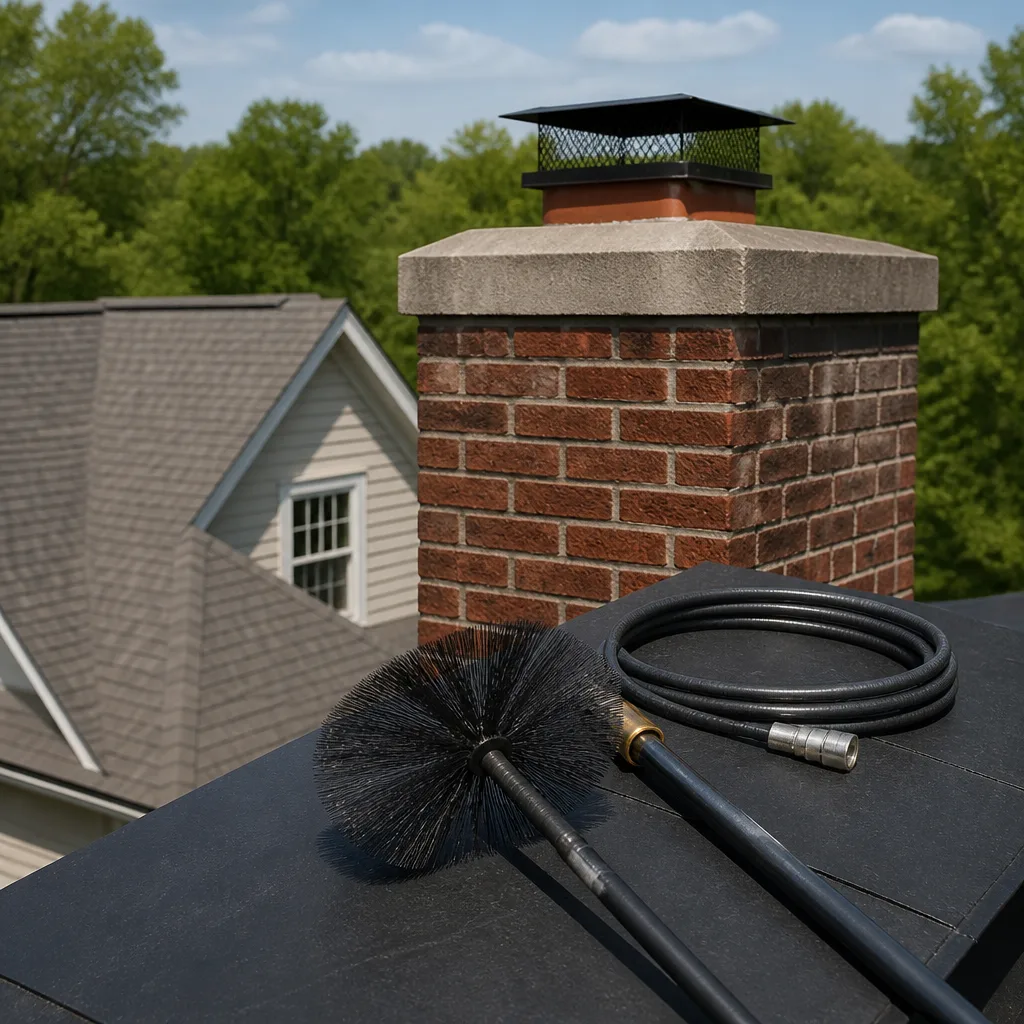 Sweep & inspection
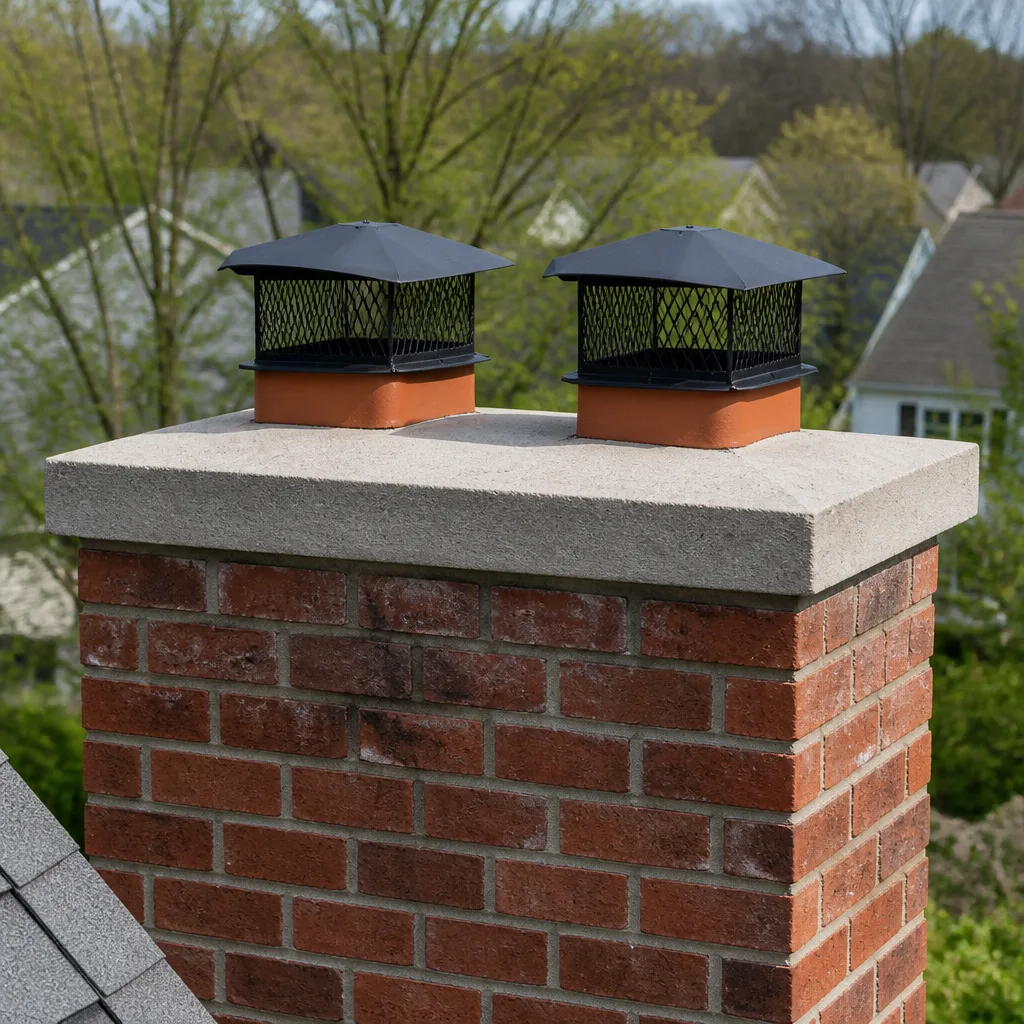 Caps & crowns
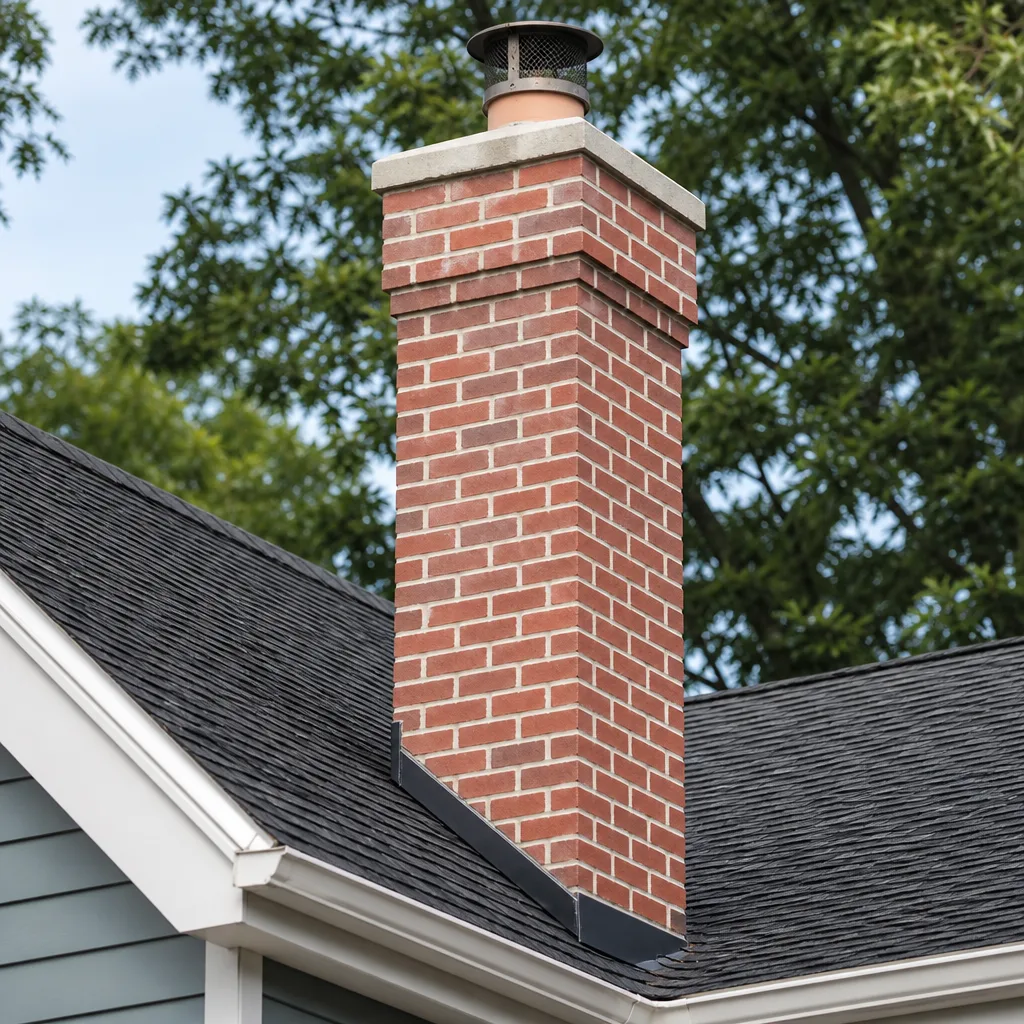 Masonry repair
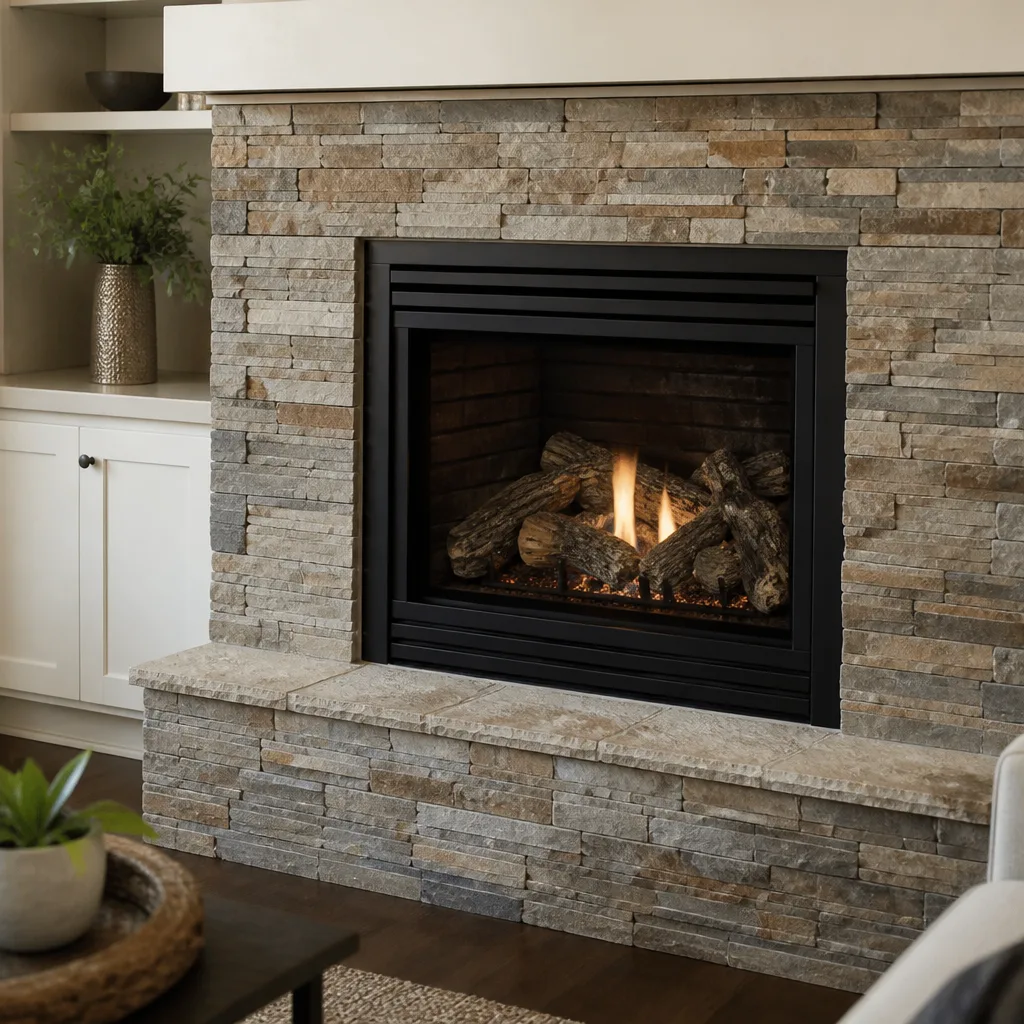 Gas fireplace service
Level 1 sweep and inspection to the NFPA 211 annual standard - flue, crown, cap, and flashing checked and photographed
Chimney sweep logs do not sweep chimneys. They loosen some creosote - which then falls where a brush and vacuum still have to collect it.
DuraFlex Flue Liner Replacement: The Los Angeles Owner’s Guide
If you’ve got a DuraFlex flue liner that’s cracked, corroded, or flagged during an inspection, a replacement typically runs $2,800 to $5,600 installed here in Los Angeles, depending on the liner diameter, chimney height, and access difficulty. We stock DuraFlex-compatible liners on our trucks and can usually complete the swap in a single visit once we’ve measured and quoted. Most Los Angeles homeowners discover the problem the same way: they call us for a routine sweep, we run a camera up the flue, and the footage shows a seam pulling apart or a section of liner that looks like it’s been through a few too many Santa Ana seasons. You don’t need to panic when you see it. You need a straight answer about whether it has to be replaced now or can wait a season. That’s exactly what we give you, with the evidence on screen before we recommend a dollar of work.
Key Takeaways
- Installed DuraFlex liner replacement in Los Angeles: $2,800 – $5,600 typical range.
- We’re an independent chimney service, not affiliated with DuraFlex, but we install and stand behind their liners daily.
- You’ll see camera footage of the damaged section before any replacement is recommended.
- Every job gets a written price before work starts and a written guarantee when it’s done.
Which DuraFlex Models This Applies To
DuraFlex makes a few liner families, and the right replacement depends on what’s currently in your flue. The most common one we pull out of Los Angeles chimneys is the DuraFlex 316L stainless steel liner, which comes in round diameters from 4 inches up to 12 inches, typically in 25-foot coiled sections. It’s a single-wall, corrugated liner rated for wood-burning fireplaces and wood stoves, and it’s the workhorse we see in homes from Silver Lake to Sherman Oaks. There’s also DuraFlex Pro, the heavier-gauge version, which we recommend for higher-use fireplaces and for chimneys with tighter clearances. If your liner is smooth-walled rather than corrugated, you may have the DuraFlex SW series, which uses a different connector system entirely. Here’s the gotcha: DuraFlex SW and standard DuraFlex sections do not share the same coupling hardware. The corrugated sections use a simple male-female slip fit, while the SW uses band clamps. Mixing them creates a joint that can separate under heat cycling. Whenever we’re replacing a DuraFlex liner in an older Los Angeles home, we always identify the series from the existing tag or from the profile of the corrugation before ordering. It prevents a lot of return trips.
For most Los Angeles homeowners with a standard fireplace, the OEM DuraFlex liner is worth the modest premium over a generic aftermarket equivalent. The reason is seam consistency. Cheap copycat liners often have irregular corrugation depth and thinner walls at the weld points, and we’ve seen them fail faster, particularly in hilly areas like Mount Washington where chimneys flex slightly with ground movement. We stock DuraFlex and quality equivalents from HeatShield and Gelco on the truck, and we’ll tell you the price difference without pushing you toward the priciest option. If your liner is one of the newer DuraFlex hybrid models with an insulation wrap, you’ll want the same configuration as the original. Changing insulation types changes draft behavior.
Styles & brands we work with
Signs Your DuraFlex Flue Liner Replacement Is Failing
Most failed DuraFlex liners don’t announce themselves. You discover the problem in one of these ways:
- Rust-colored flakes or metallic bits in the firebox after a burn. This usually means the inner wall of the liner is delaminating or the stainless has begun to oxidize from condensation. It’s a sign the liner has lived through one too many cycles of hot fire followed by damp coastal air. In Los Angeles, the marine layer near the west side accelerates this even if you only burn occasionally.
- A sudden change in how the fireplace draws. If smoke that used to go straight up now hangs in the living room or drifts back after ten minutes of burning, the liner may have developed a crack or, worse, a separated joint mid-chimney. A separated DuraFlex joint disrupts the draft and lets smoke collect in the flue cavity before it finds its way out, or back in.
- Water in the fireplace after rain. A failed liner often pairs with a cracked crown or loose chase top, but water making it all the way into the firebox usually means the flue itself is breached. We find this often in Los Angeles homes built in the 1920s and 1930s where the original clay tile wasn’t fully removed before the DuraFlex was retrofitted. The liner shifts, the joint pulls, and water follows gravity.
- Flaking creosote globs larger than a dime falling during a sweep. The corrugations in a DuraFlex liner are designed to trap creosote in a controlled way, but if the liner is cracked, creosote builds unevenly and drops in chunks rather than brushing out as powder. If our brush comes out loaded with heavy tar, we know we’re looking at a liner that’s been running too cool or is already compromised.
- A strong sulfur or chemical smell during a fire. Stainless liners shouldn’t smell. If you’re getting a chemical-tinged odor, the liner may be reacting with sulfur compounds in the coal or manufactured log your previous owner burned, or worse, it’s been exposed to enough heat to take the temper out of the steel. We’ve seen DuraFlex liners near Eagle Rock that were roasted by years of burning pine with the damper barely open.
If any of these sound familiar, don’t light another fire until you know what you’re dealing with. A compromised flue liner moves carbon monoxide into wall cavities and indoor spaces before you ever see smoke. Call us at (213) 652-7061 and we’ll get a camera in the flue within a couple of days.
See the difference
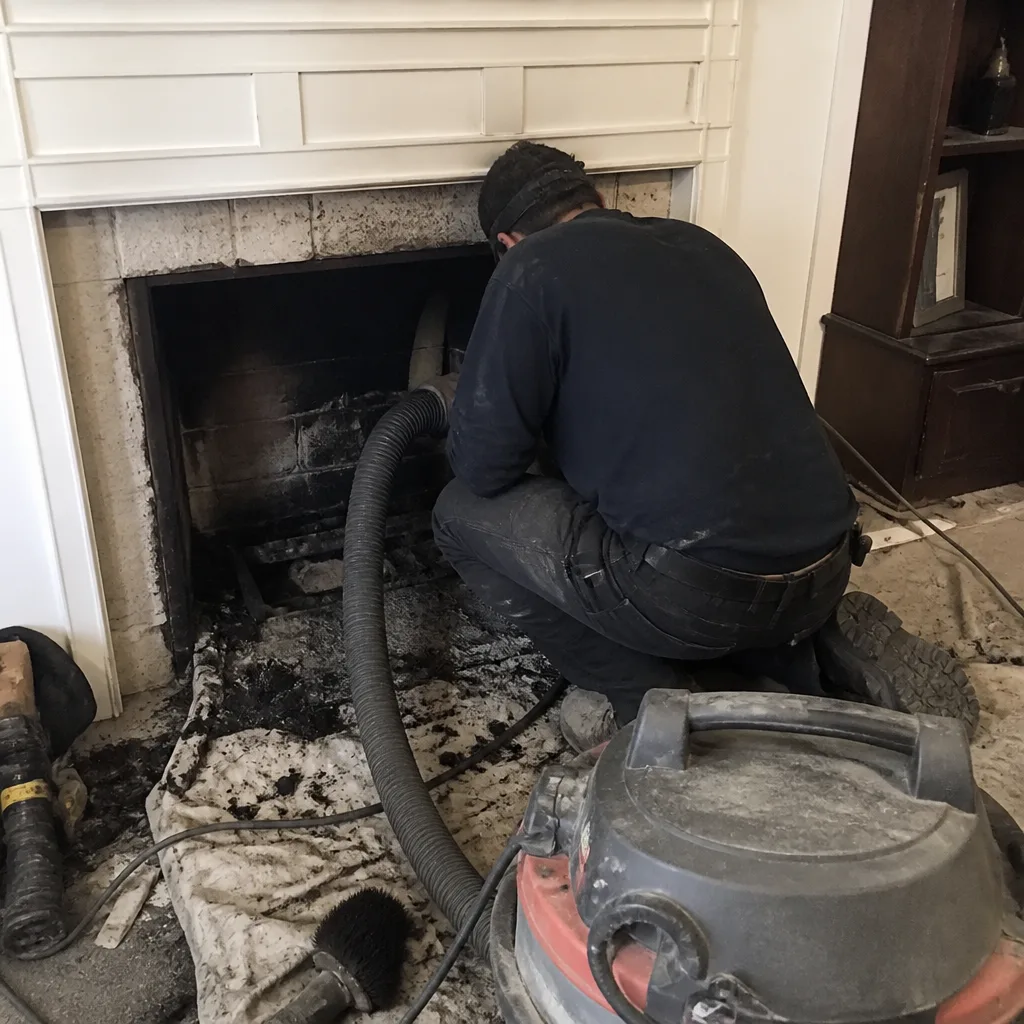 Before
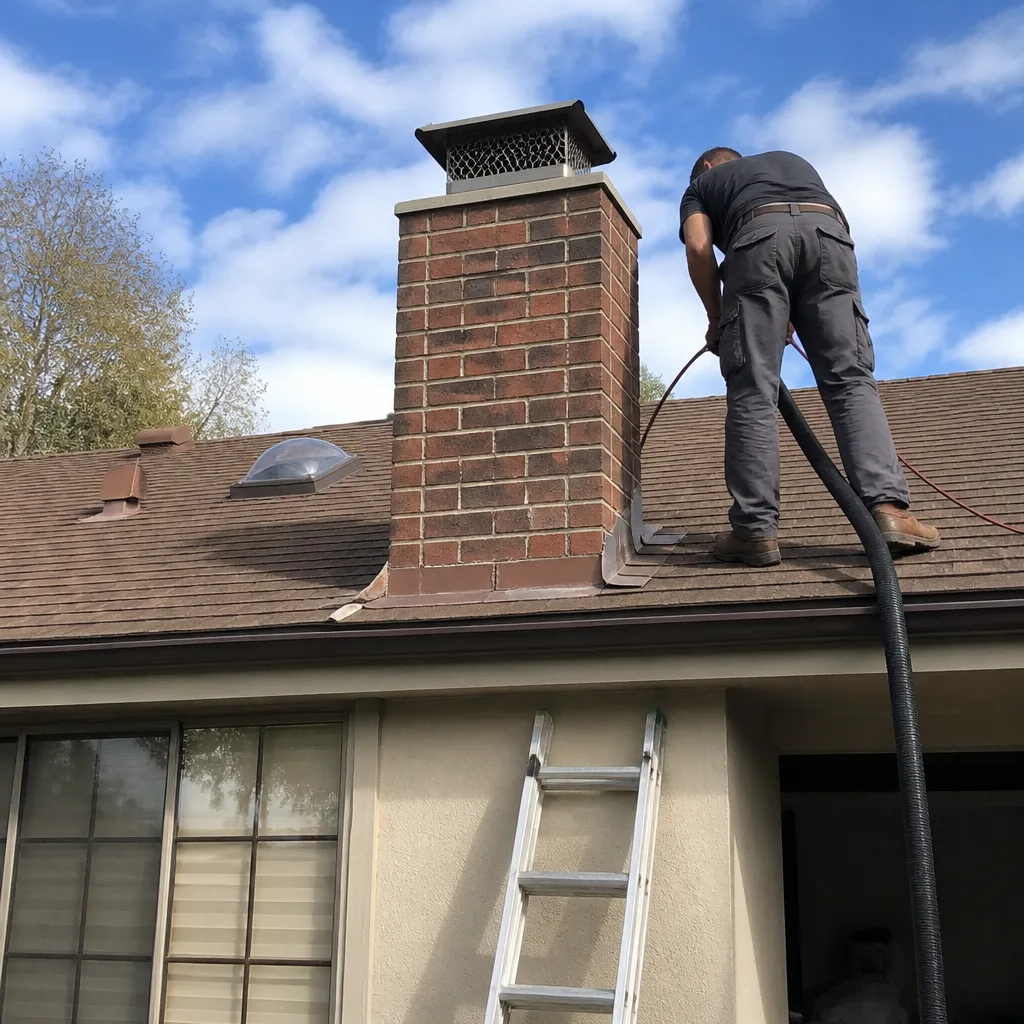 After
After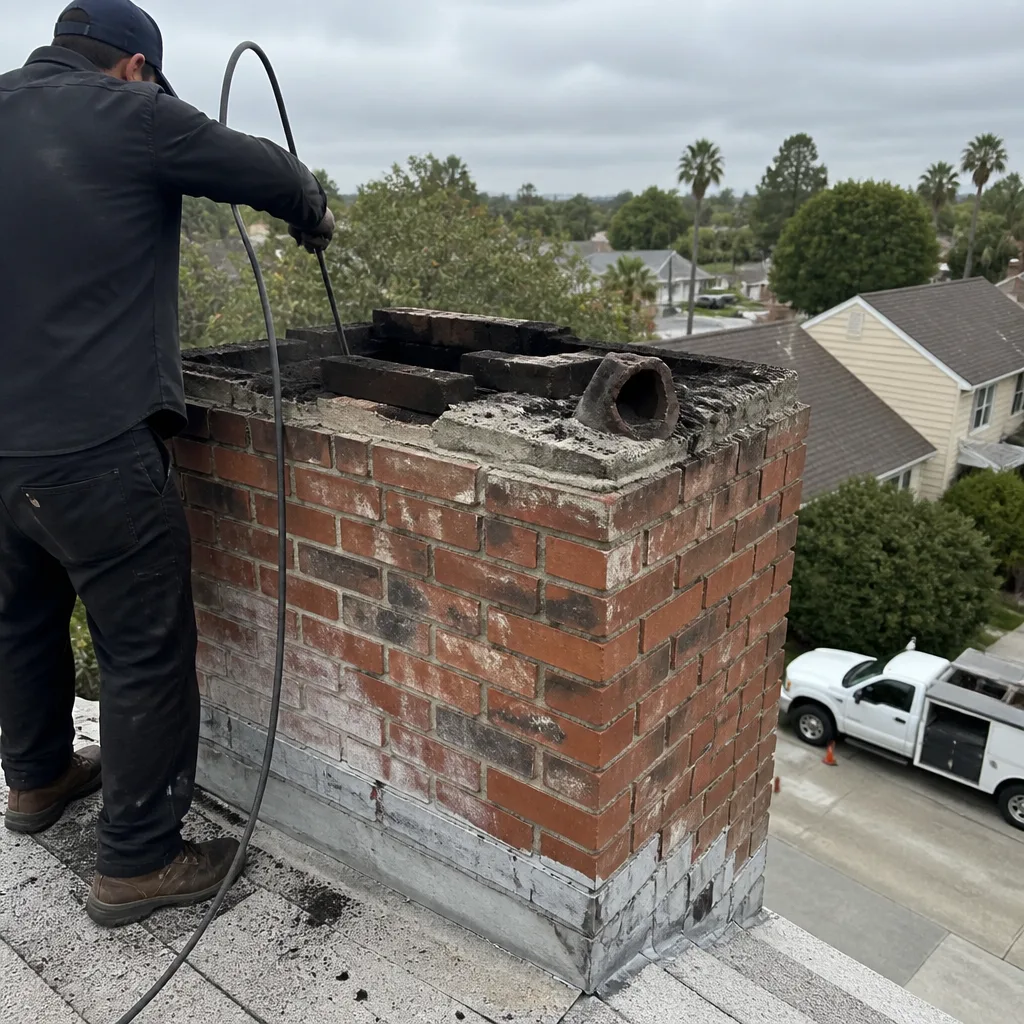 Before
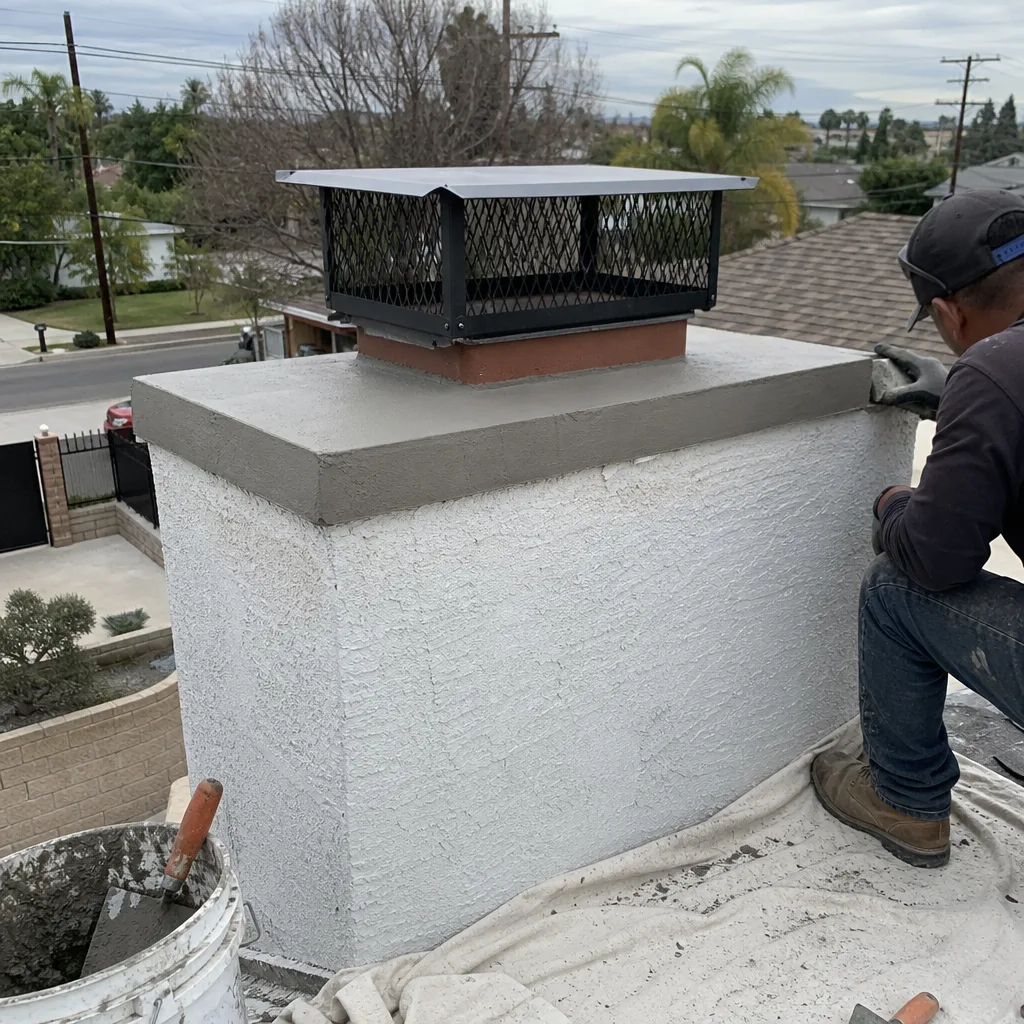 After
After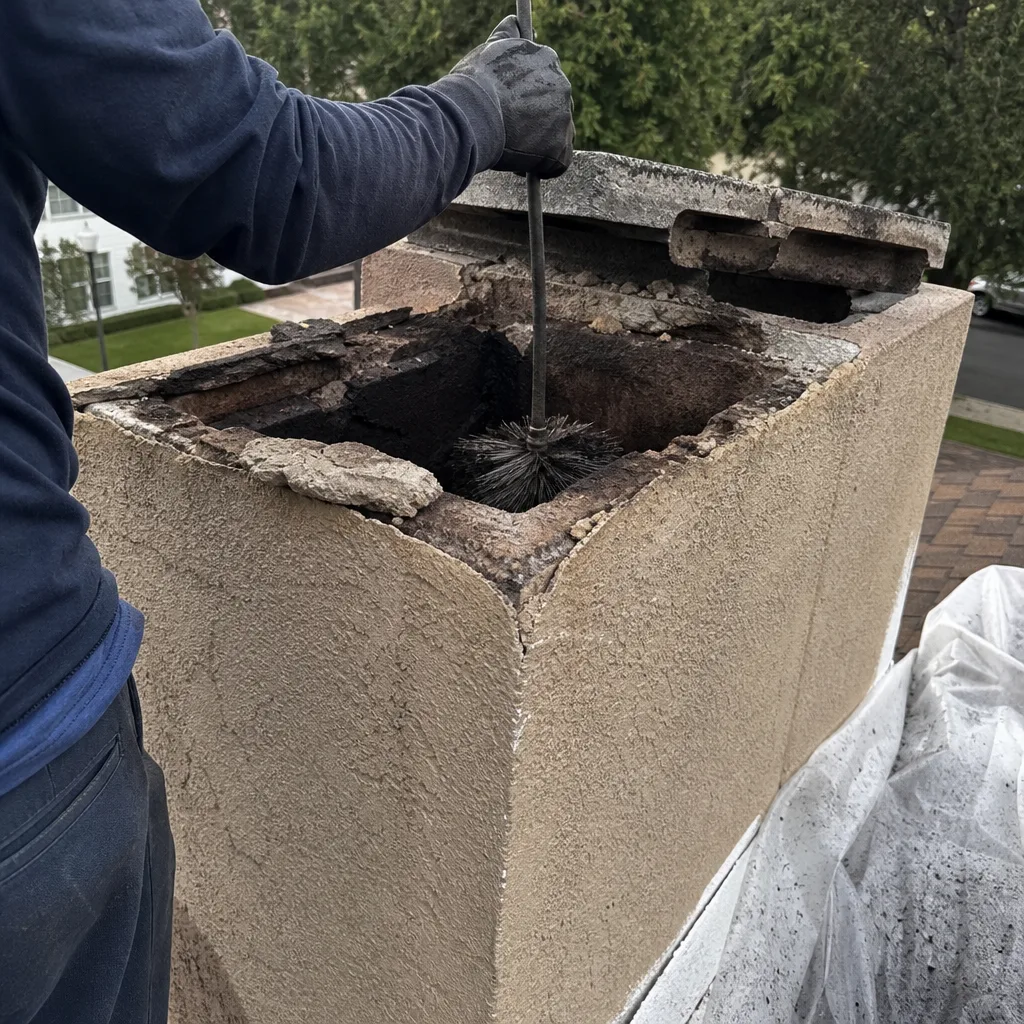 Before
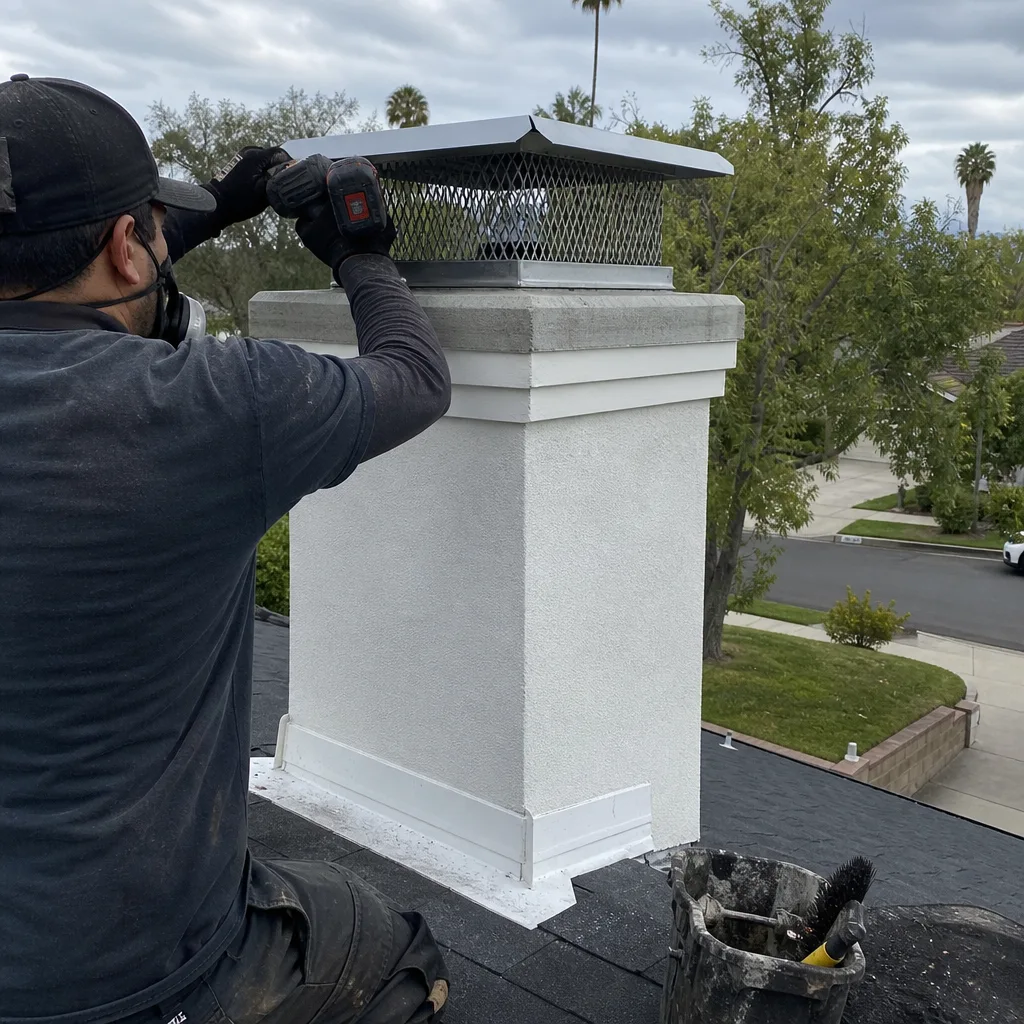 After
AfterReplacement Cost & What’s Included
Here’s the plain-dollar picture for DuraFlex flue liner replacement in Los Angeles: a standard fireplace with a 6-inch round single-story flue runs $2,800 to $3,600 installed. A two-story home where we’re working from a roof with a steeper pitch pushes that to $3,400 to $4,600. A full reline with a tee body at the base for a furnace or water heater connection lands between $4,000 and $5,600 when you factor in the additional fittings and the time to re-pitch the connector pipes. What drives the difference is mostly access: the height of the roof, whether we need a lift or just ladders, and whether the existing liner came out cleanly or put up a fight.
Every quote we write in Los Angeles shows the liner cost as a line item, the fittings as a line item, and the labor as a line item. You don’t get a single mystery number. If we quote you $3,200, the invoice says $3,200. That’s the Kingswell Way and it doesn’t change because it’s a rainy Tuesday or because the job took an extra hour. The guarantee runs 365 days on our liner installations. If the liner separates, cracks, or fails inside that year, we come back and fix it at no charge. Not a re-diagnosis fee, not a parts-only exception. Fixed, free, done.
| Scope | Typical Installed Range (Los Angeles) |
|---|---|
| Single-story, 6-inch round, straight flue | $2,800 – $3,600 |
| Two-story or steep roof access | $3,400 – $4,600 |
| Full reline with tee and connector for furnace/water heater | $4,000 – $5,600 |
Note: those ranges assume the existing liner comes out in one piece. We inspect the chimney structure before quoting. If masonry work on the smoke shelf or firebox is needed, we’ll show you the camera before recommending it. No line item gets added because “while we were in there” we found something you can’t verify.
DIY or Call Us?
If you’re the type who likes to look at a problem before paying someone, here’s what you can safely do. You can take a flashlight and examine what’s visible of the liner from the fireplace opening and from the top of the chimney if you’re comfortable on a ladder. You can look for obvious gaps, rust, or moisture staining around the top plate. You can call your previous chimney company and ask for the liner’s model and size if they ever provided it. What you cannot safely do is pull a liner yourself from a Los Angeles chimney. DuraFlex liners are installed under tension. A 25-foot section wants to spring back into a coil, and if it lets go mid-pull, it can take out brick, flashing, and the hands holding it. This is not a job where YouTube gets you through a Saturday afternoon.
More than the immediate hazard, a botched liner pull often damages the flue tiles behind it, turning a $3,000 liner job into a $7,000 rebuild. We’ve fixed several homeowner-pulled liner jobs in Los Angeles, and the economics never favor the DIY route. Let us put a camera in there first. If the liner is actually fine and the issue is something simpler, we’ll tell you that and charge you for the inspection, not an unnecessary replacement. Call (213) 652-7061 and we’ll get you on the schedule.
FAQs
In Los Angeles, a 316L stainless DuraFlex liner typically lasts 15 to 25 years, with the shorter end for homes near the coast where marine air accelerates corrosion and for fireplaces used heavily with wet or green wood. The real killers are creosote acidity and the radiant heat from an unlined or poorly insulated flue, not the calendar. We’ve pulled 30-year-old DuraFlex liners out of Atwater Village bungalows that still had life in them, and we’ve replaced 8-year-old liners near Playa del Rey that looked like Swiss cheese. Annual inspection is the honest answer to lifespan. If we see the liner once a year on camera, we can usually catch the failure early enough to avoid a re-lining emergency. Call (213) 652-7061 for an inspection if your liner’s age is an open question.
The honest answer is rarely, and we will tell you this even though repair is the cheaper answer you may want to hear. Small pinholes can sometimes be patched with a stainless band kit, but DuraFlex’s corrugated profile means a patch is a temporary fix. The corrugations exist to absorb thermal expansion, so a rigid patch creates a stress point that eventually cracks the surrounding steel. For any crack longer than a few inches, a separated joint, or corrosion that has thinned the wall, replacement is the only option that leaves the flue safe to burn. We only recommend what the camera footage supports. If your liner is patchable, we’ll patch it and put the guarantee in writing. If it’s not, we’ll say so plainly and show you why. Call (213) 652-7061 for a straight assessment.
Most single-story DuraFlex liner replacements in Los Angeles are completed in one visit of 3 to 5 hours, including the removal of the old liner, a sweep of the chimney interior, and the install and reconnection of the new liner. If the chimney requires masonry work on the crown or the smoke shelf, or if we need a mechanical lift for roof access, that extends the job to a second visit. We’ll tell you the full schedule in the written quote. We’re also realistic about Los Angeles parking and roof conditions. If we need a permit for a lift in a right-of-way, that adds a couple of days for processing, not for our labor schedule. We will never quote you a one-day job that turns into a three-week saga without a phone call explaining why.
We stock the most common DuraFlex liner sizes on our trucks, including 6-inch and 8-inch round in both standard and heavy gauge, along with the associated top plates, caps, and connectors. For less common sizes or the SW smooth-wall series, we can have the exact section from our supplier within two to three business days. You never need to order the part yourself. In fact, we ask that you don’t. We need to match the exact series and diameter to your chimney, and ordering the wrong liner puts the wrong material on your curb. If you’ve already purchased a DuraFlex liner thinking you’d save a few bucks, we’re happy to install it, but we’ll inspect the condition before we do. The warranty on the liner itself comes from the supplier. Our labor guarantee covers the installation. Call (213) 652-7061 to confirm what’s in stock for your chimney size.
If you keep burning with a compromised DuraFlex liner, you’re pushing combustion byproducts, carbon monoxide, and water vapor into the chimney cavity instead of out the top. The result is not a dramatic house fire every time. It’s often slower: water infiltration that rots the framing around the chimney, carbon monoxide that seeps into upstairs bedrooms, and flue gases that accelerate the deterioration of whatever is left of the original masonry. In Los Angeles, where we burn seasonally but the chimney sits damp and cold the rest of the year, the damage compounds during the months you’re not using the fireplace. It’s the opposite of a scare tactic to say a $3,000 liner replacement is the cheap version of this problem. The expensive version comes later. Call (213) 652-7061 and we’ll show you what we’re seeing.
Written by Nathan Corliss, Owner, Ashby Chimney Los Angeles at Ashby Chimney Los Angeles, serving Los Angeles and nearby areas.