
 Sweep & inspection
 Caps & crowns
 Flue relining
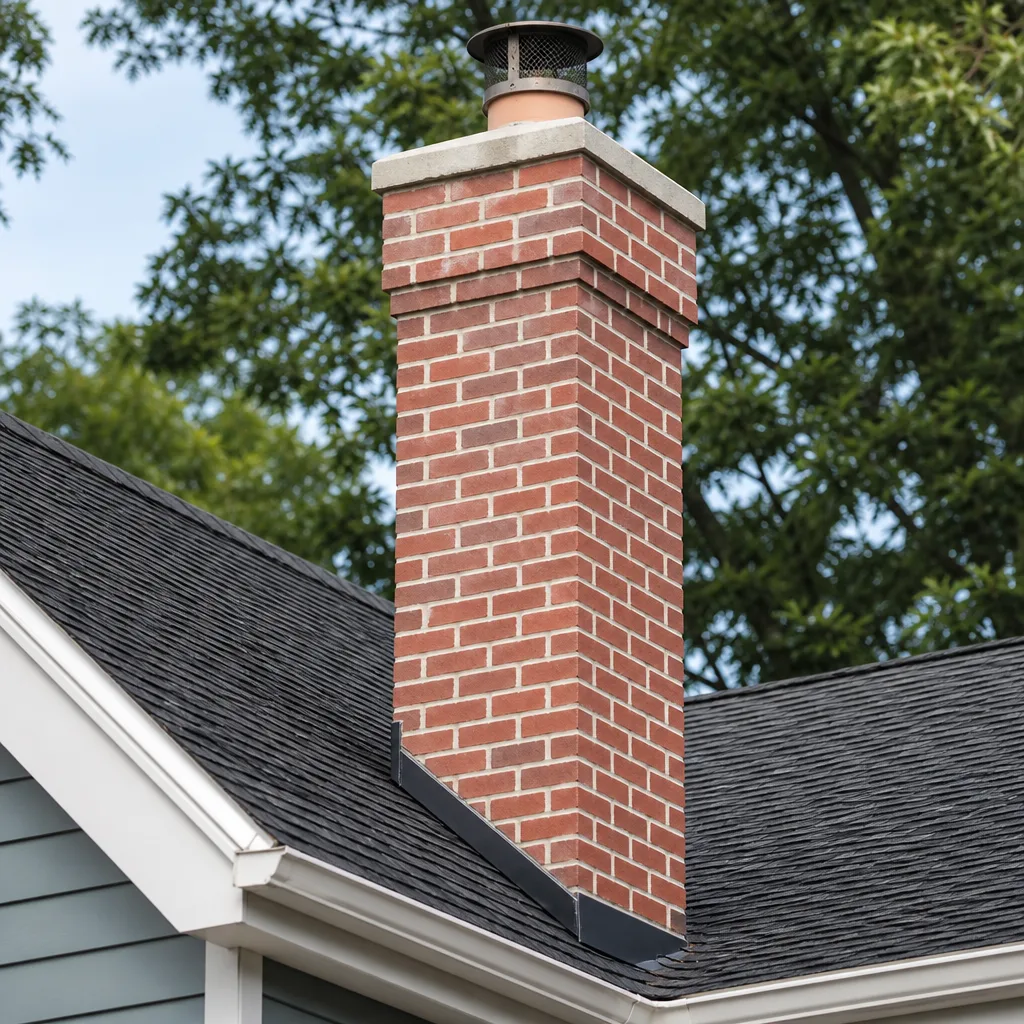 Masonry repair
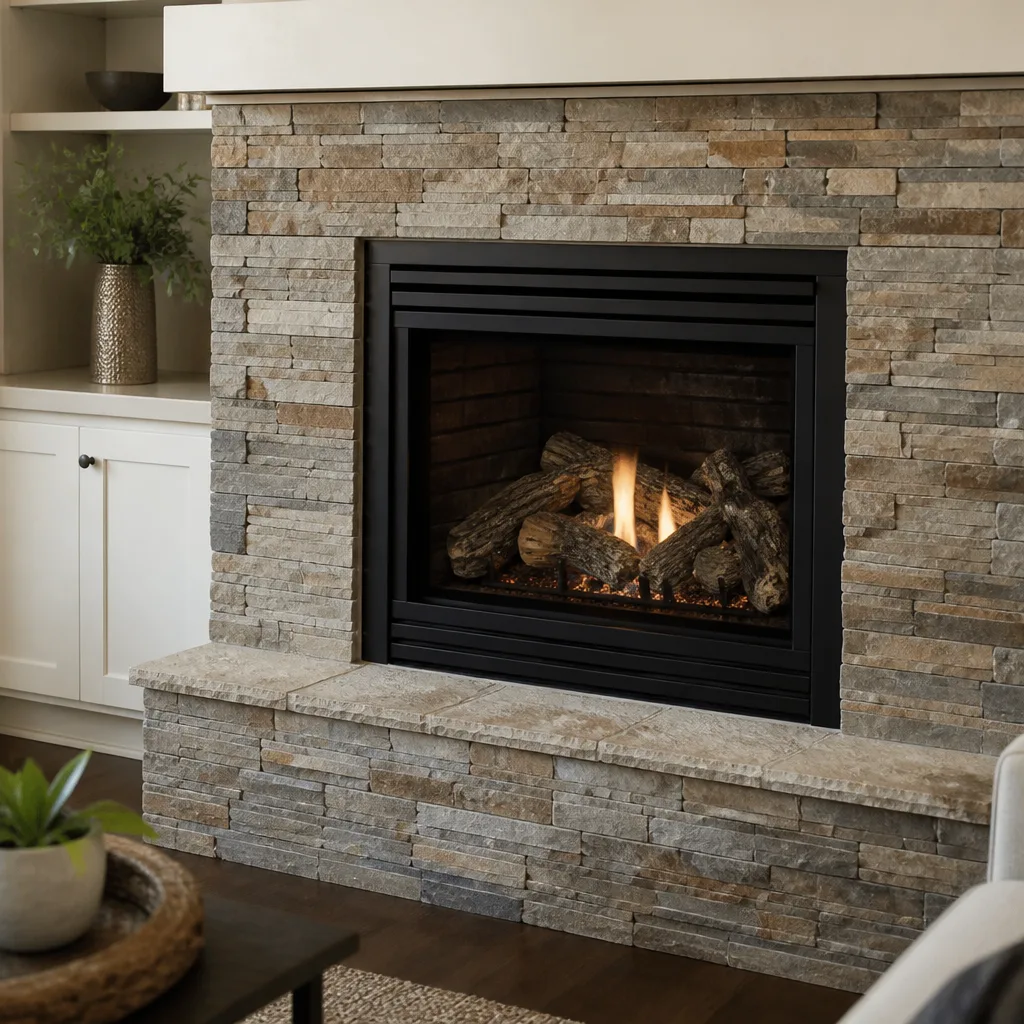 Gas fireplace service
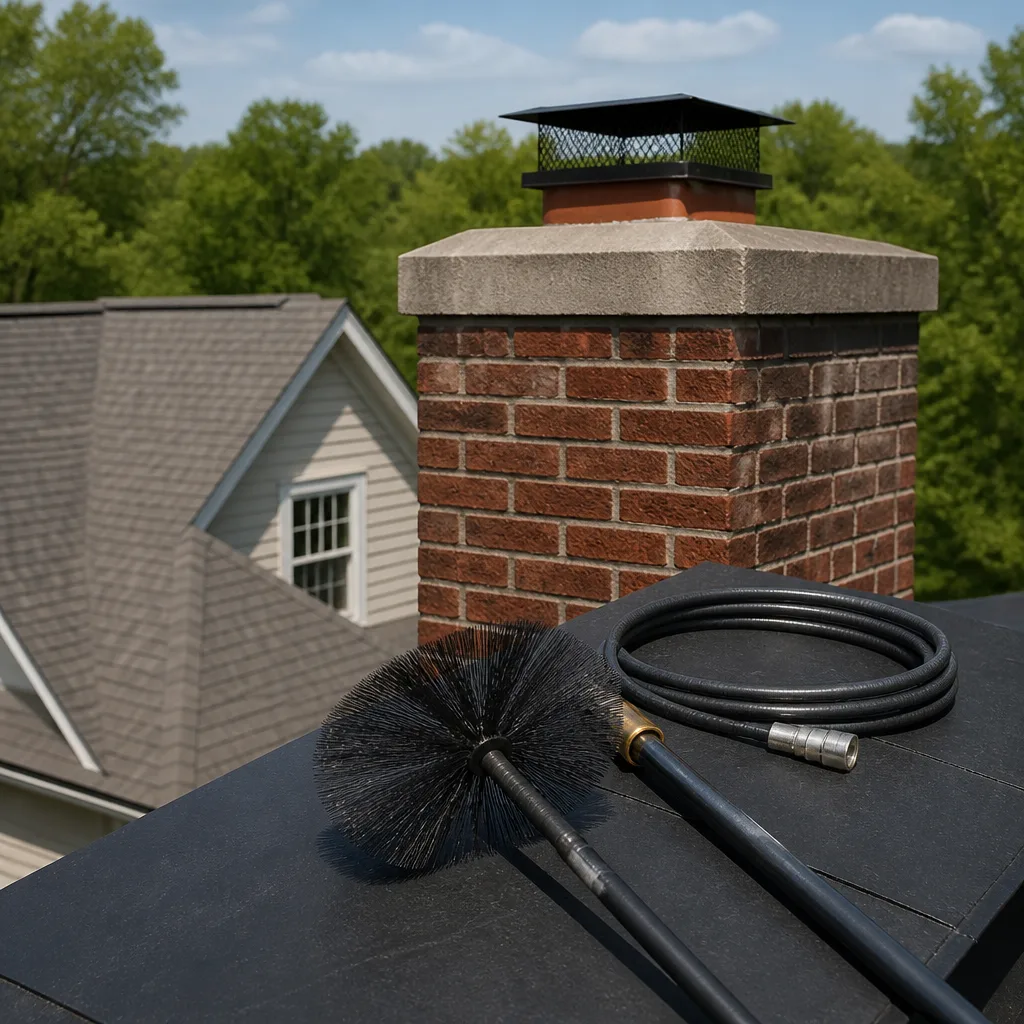
Level 1 sweep and inspection to the NFPA 211 annual standard - flue, crown, cap, and flashing checked and photographed
Chimney sweep logs do not sweep chimneys. They loosen some creosote - which then falls where a brush and vacuum still have to collect it.
Styles & brands we work with
See the difference
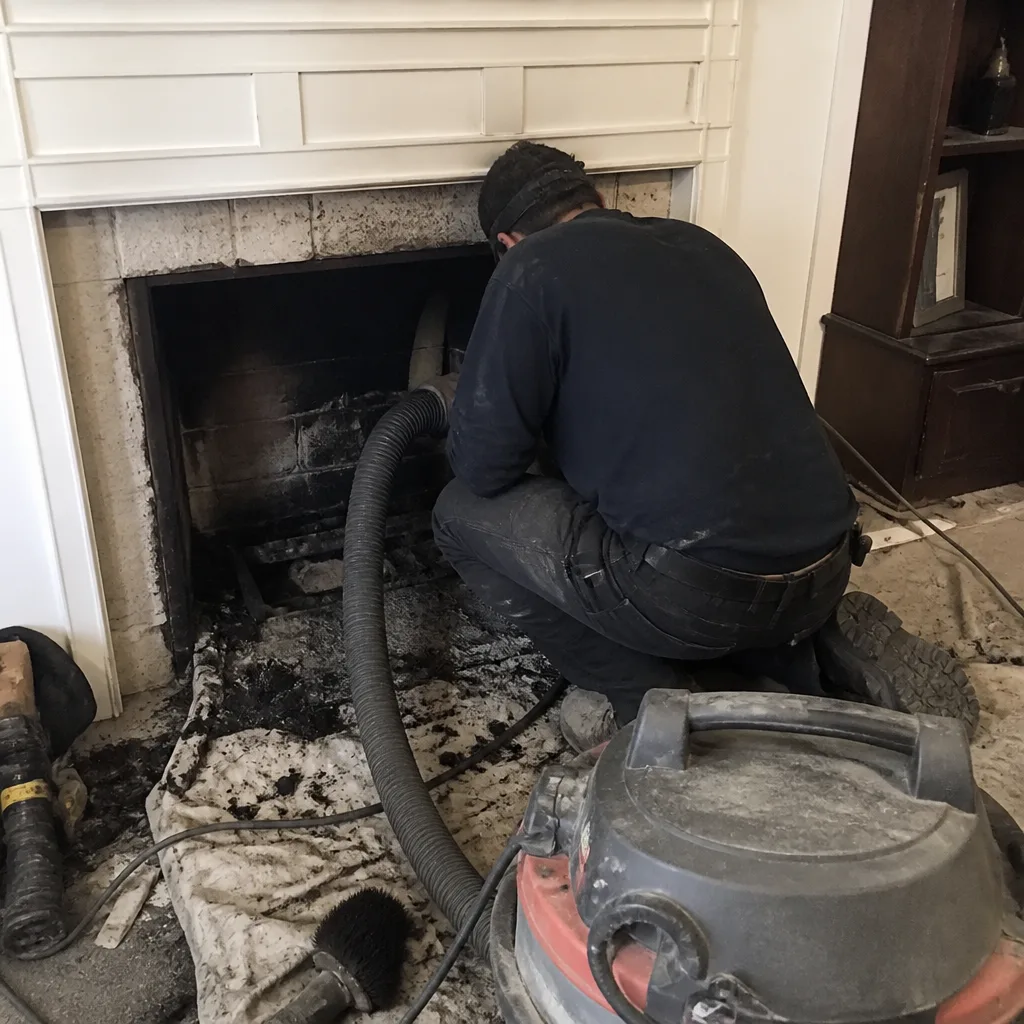 Before
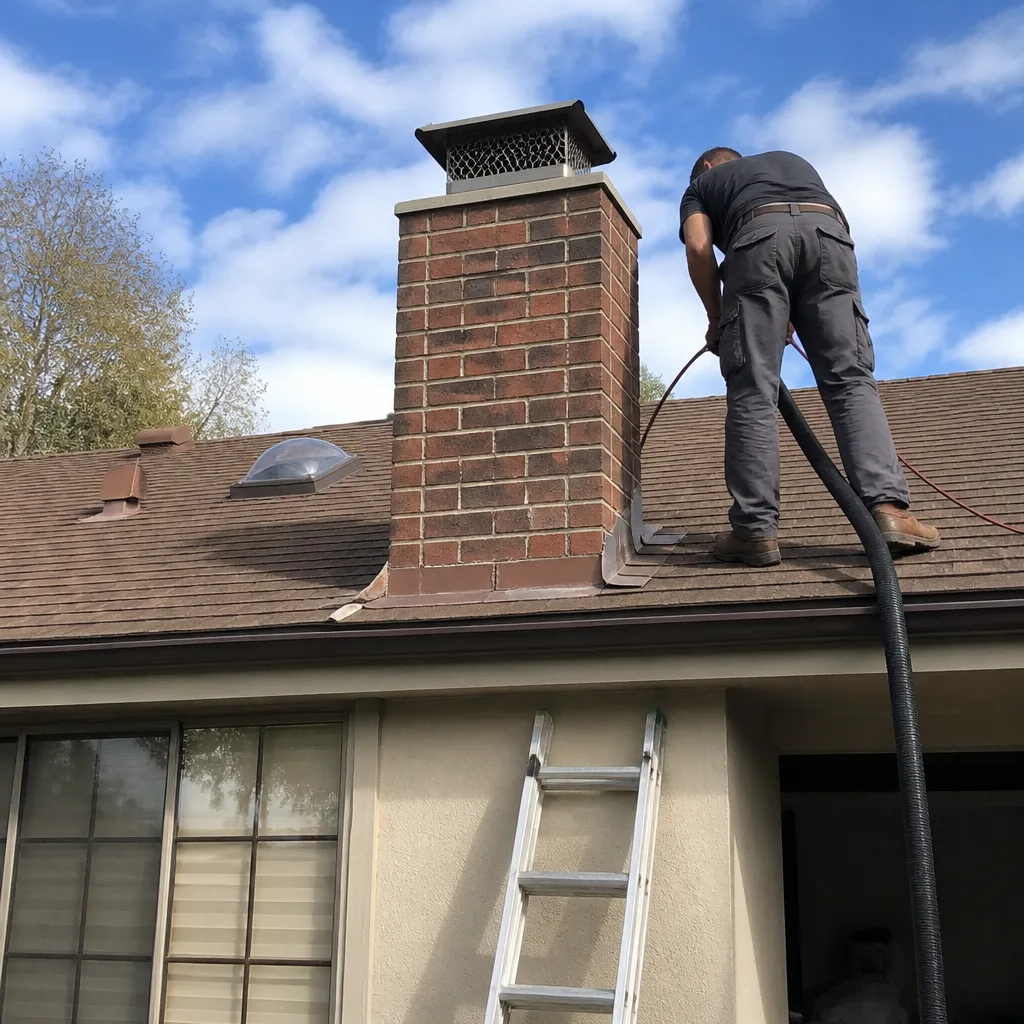 After
After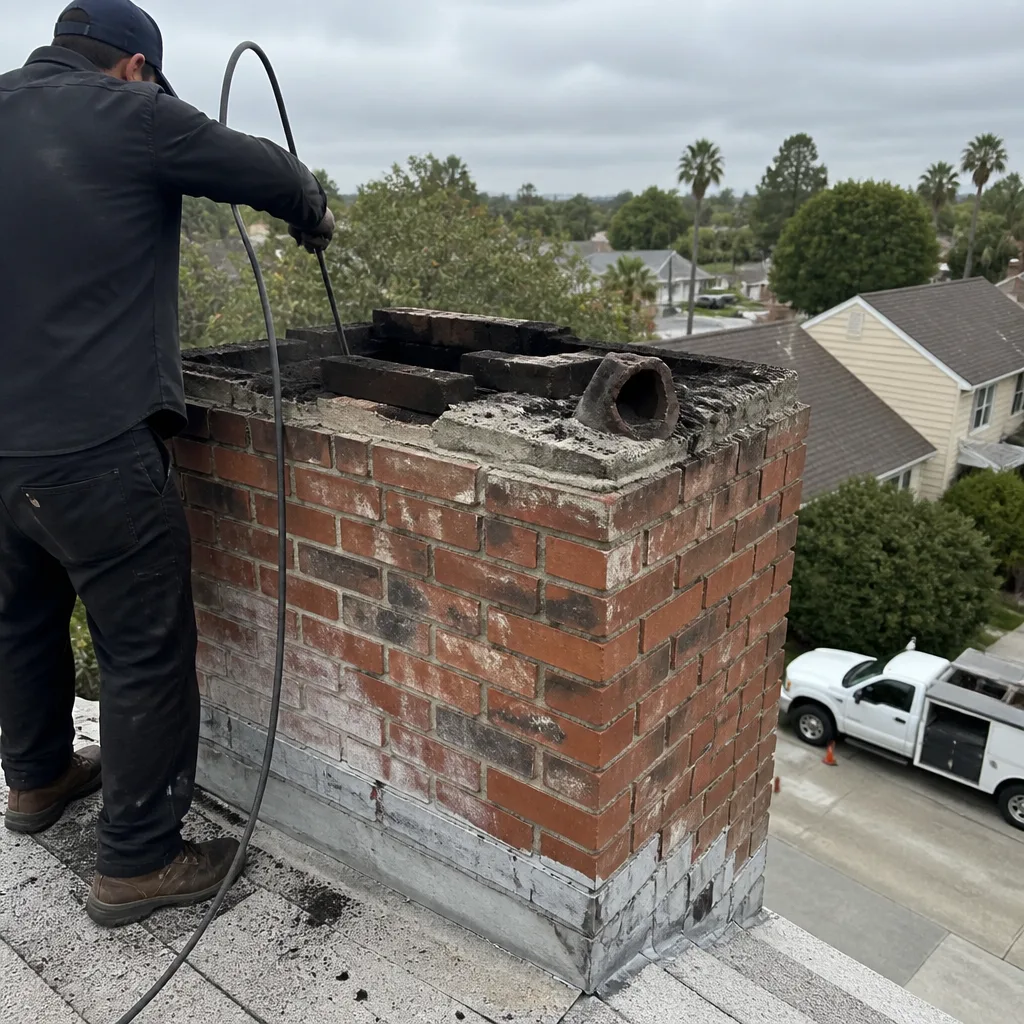 Before
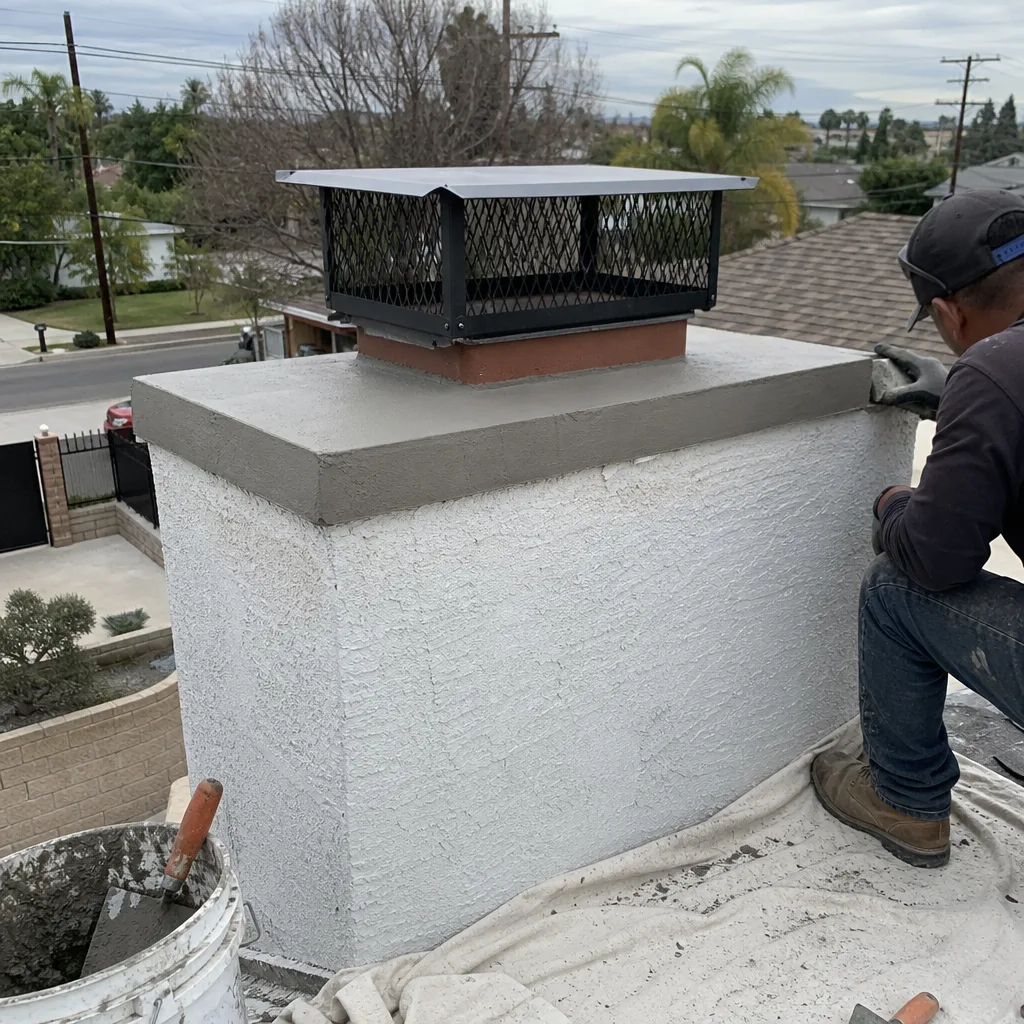 After
After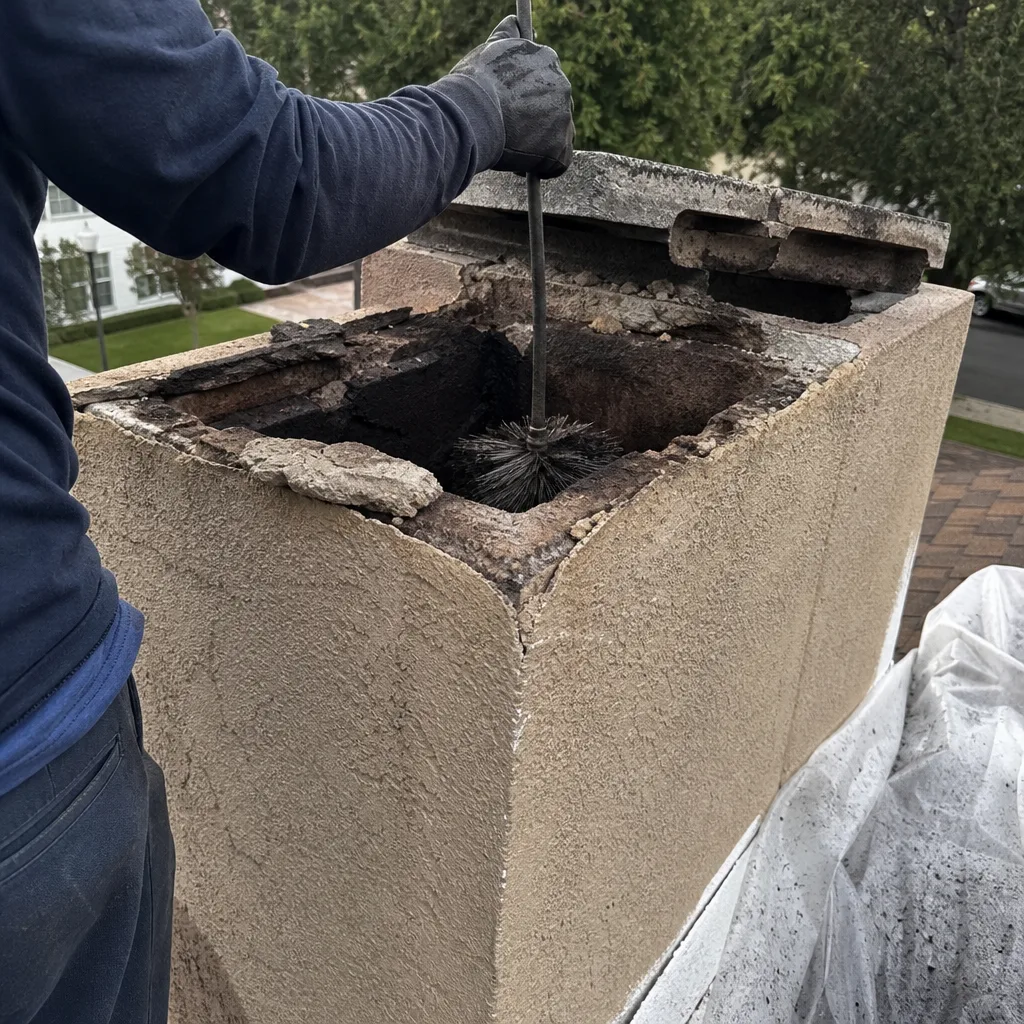 Before
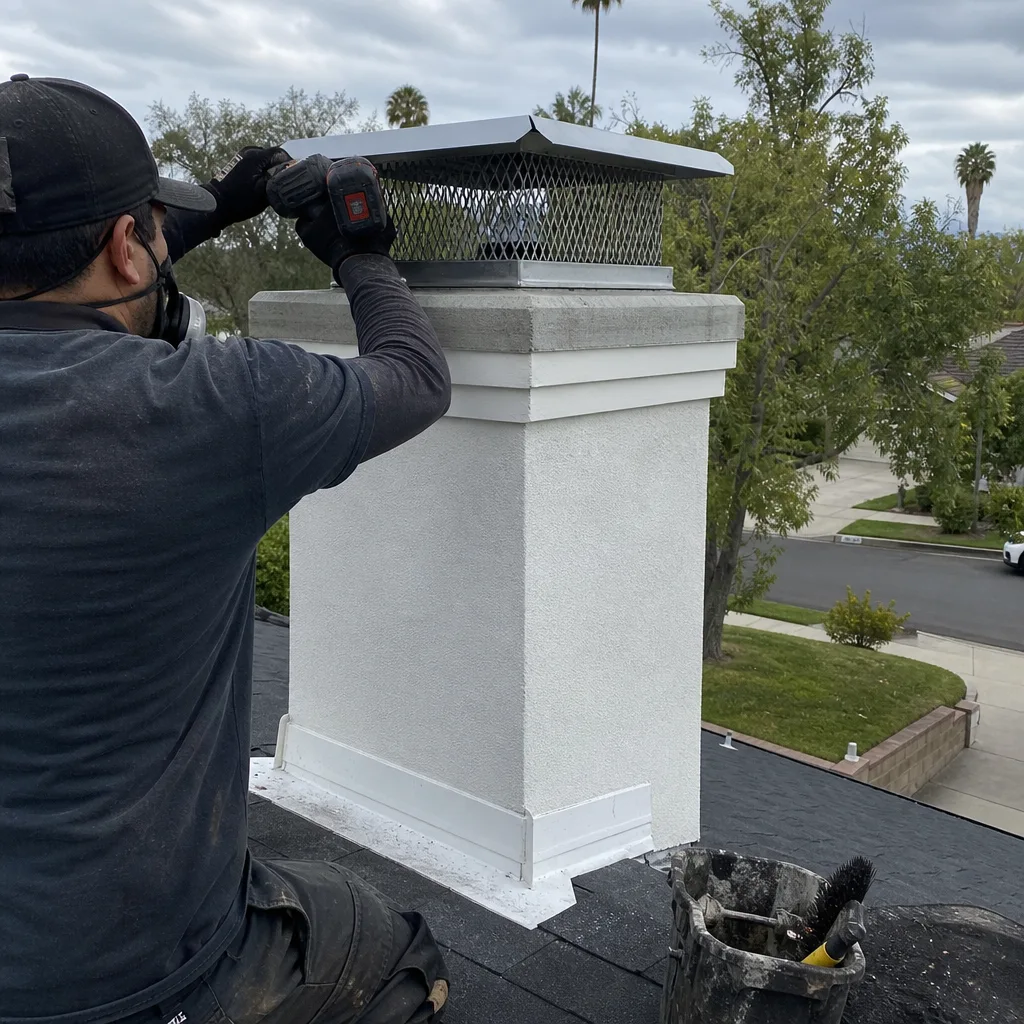 After
AfterHow Much Does Chimney Cap & Crown Cost in Los Angeles?
Chimney cap and crown work in Los Angeles typically runs $300 to $2,200 depending on what you need. A basic chimney cap replacement with a standard galvanized steel cap starts around $300 to $600 including labor, while a custom stainless steel or copper cap runs $700 to $1,400. A full concrete crown rebuild on a standard single-flue chimney in LA land costing between $1,200 and $2,200. The wild card is access: if your roofline is steep, the chimney is three stories up, or you’ve got clay tile roofing that needs careful staging, expect to land toward the higher end of every range.
Key Takeaways: Chimney Cap & Crown Pricing in Los Angeles
- Cap replacement only: $300 to $1,400, depending on material and flue size
- Crown rebuild (concrete): $1,200 to $2,200 for a standard single-flue chimney
- Cap plus crown together: $1,500 to $3,300 on most LA homes
- Custom copper or multi-flue caps: $900 to $2,500+
- Most common LA job we quote: cap replacement with minor crown patching, $450 to $850
- The crown is often the real problem: cracked crown, not a bad cap alone, after 20+ years of sun and rain
Chimney Cap & Crown Cost Breakdown (2026)
Here’s what you’ll actually see on an invoice in Los Angeles. These aren’t national averages pulled from a database. They’re the numbers we quote week in and week out from Westchester to Pasadena to Studio City.
| Job | Typical LA Price Range | What You’re Paying For |
|---|---|---|
| Standard galvanized steel cap, single flue | $300 – $500 | Off-the-shelf cap, 30-45 minutes on the roof |
| Stainless steel cap, single flue | $450 – $750 | Better rust resistance near the coast; 10+ year lifespan |
| Stainless steel cap, multi-flue (2-3 flues) | $650 – $1,100 | Custom or modular sizing, more time to fit and seal |
| Copper cap, single flue | $850 – $1,400 | Aesthetics, 30+ year lifespan, patina over time |
| Crown patch, minor cracks | $150 – $400 | Caulk, sealant, small mortar fills; buy you 2-5 years |
| Crown rebuild, standard single-flue | $1,200 – $2,200 | Chisel out old crown, form, pour new concrete, seal |
| Crown rebuild with stainless cap replacement | $1,500 – $2,800 | Combined job; often cheaper than doing them separately |
| Full rebuild: crown, cap, and top flue tile | $2,200 – $3,300 | When spalling goes deeper than the surface |
To be clear about what these numbers include: our prices cover materials, labor, roof access, cleanup, and the written guarantee. They do not include hidden “trip fees” or “roof hazard surcharges” that show up after the work starts. The price we write down before we touch anything is the price on the final invoice. That’s the Kingswell Guarantee and Nathan Corliss has run this business on it since 2002.
What Affects Chimney Cap & Crown Pricing in Los Angeles
Several factors move the number between the low and high end of the ranges above. Here’s what actually matters on an LA roof:
- Roof access and pitch. Spanish tile and barrel tile roofs common in Silver Lake, Los Feliz, and Hancock Park require more careful staging. Steep pitches on hillside homes in Mount Washington or Baldwin Hills add time and safety equipment. A simple cap replacement on a flat-tar roof in the Valley might take 45 minutes; the same job on a three-story Spanish Colonial in Larchmont with a 8/12 pitch can take two and a half hours.
- Chimney height and flue count. Two-story is normal. Three-story adds ladder work and fall-arrest setup. And if you have a two-flue or three-flue chimney, the cap has to be sized or fabricated to span the entire crown, not just one clay flue tile.
- Proximity to the coast. Homes within about three miles of the ocean in Santa Monica, Venice, Playa del Rey, and Pacific Palisades get marine-air corrosion. Galvanized steel caps there rust fast, sometimes within 4 to 6 years. We almost always recommend stainless or copper in coastal zones, which pushes a cap from $400 to $700 or more. That’s not an upsell. It’s the difference between replacing the cap twice versus once every 12 to 15 years.
- Condition of the crown underneath. You might call us for a new cap and find the concrete crown underneath is cracked, spalling, or missing chunks. We won’t bolt a new cap onto a failing crown and call it done. That drives the quote from cap-only to crown-rebuild territory. It’s the most common reason a chimney cap project in LA ends up bigger than expected.
- Material choice. Galvanized, stainless, copper, and powder-coated steel are the main options. Copper runs about three times the cost of galvanized but lasts four to five times as long. Stainless hits the sweet spot for most LA homeowners: good corrosion resistance, reasonable price, zero maintenance.
- Permit and code considerations. Most cap and crown work in Los Angeles doesn’t require a permit since it’s a repair, not new construction. But if your chimney is visible from the street in a historic district (parts of Angelino Heights, West Adams, or Windsor Square), there may be design-review requirements about cap style and material. We’ve replaced plain galvanized with dark powder-coated or copper caps in a handful of historic preservation overlay zones. That’s an LA-specific detail that rarely shows up in generic chimney pricing guides.
Chimney Cap vs. Crown: What’s the Difference and Why It Matters for Pricing
These two terms get tossed around like they’re the same thing. They’re not, and the price difference is significant.
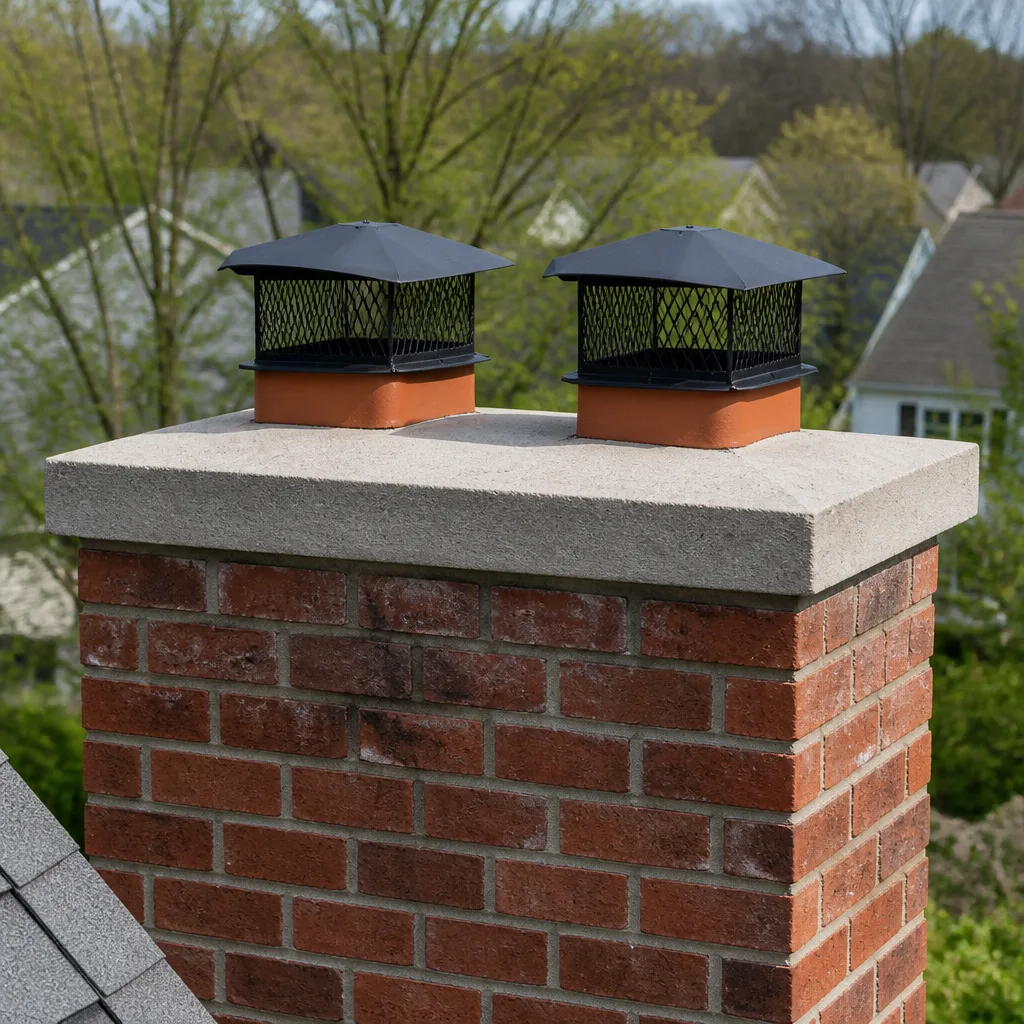
The crown is the concrete or mortar slab that sits on top of the chimney’s brick or masonry structure. Its job is to shed water away from the flue and the brickwork below. It’s the roof of your chimney. A crown that’s cracked, spalling, or worn down from 20 years of LA sun, rain, and the occasional Santa Ana wind blow-through becomes a direct path for water into your brick and mortar. The freeze-thaw cycle isn’t much of a factor here like it is in Chicago or Denver, but our wet winter months and intense summer heat absolutely break down concrete over time.
The cap sits on top of the flue opening itself. It’s the metal lid (or sometimes a combination lid-and-mesh assembly) that keeps rain, leaves, birds, squirrels, and embers from going down the flue. A cap with no spark-arrestor mesh is a fire hazard during wildfire season; embers from your own fireplace can land on your roof or a neighbor’s in dry conditions. The mesh also keeps pigeons from turning your chimney into a condominium, which happens more often than you’d think in neighborhoods like Koreatown and Westlake where pigeon pressure is constant.
If your cap is rusted but your crown is solid, you’re looking at a $300 to $700 job. If the crown is the problem, you’re looking at $1,200 and up. One of the reasons we push for a Chimney Cap & Crown inspection in Los Angeles when we’re doing work up top is that the two problems usually show up together, and fixing one without checking the other is a false economy.
How to Save on Chimney Cap & Crown Work in Los Angeles
None of these tips involve cheaping out on materials or doing roof work with a YouTube tutorial. They’re about timing, bundling, and not paying for things you don’t need.
- Bundle cap and crown work. If your crown needs patching and your cap is getting thin, doing both in one visit saves you the cost of a second trip and staging. That’s usually $150 to $300 in savings versus scheduling them six months apart. It’s the same logic as changing your timing belt while the alternator is already out.
- Don’t pay for a “Level 3” inspection you don’t need. A standard visual inspection during a cap replacement is typically included. Cameras, smoke tests, and full structural reviews are things we recommend when there’s evidence of a deeper problem, not as an automatic add-on to every cap quote. If a contractor tries to sell you a $600 camera inspection for a simple cap replacement, get a second opinion.
- Get the crown checked every two to three years. A $200 crown patch today prevents a $1,800 rebuild in three years. The math is straightforward. Cracks don’t get smaller. Water keeps working. In LA’s rainy season, a hairline crack becomes a channel by January and a spalled gutter by March.
- The LA coastal rule: pay more once, not less twice. If you live within a few miles of the ocean, spending $200 extra on a stainless cap versus galvanized saves you $450 to $600 over a decade. We install materials from recognized chimney-trade suppliers including DuraFlex, HeatShield, Gelco, Olympia Chimney, Famco, and Copperfield. These aren’t hardware-store caps. They’re built for real weather and real wear.
- Call for a free estimate, know the number before we climb. Estimates are free. Call (213) 652-7061 and we’ll give you a straightforward range over the phone based on what you’re seeing from the ground: cap rust, visible crown cracks, water staining, flue condition. If it looks like a cap-only job, we’ll say that. We write the price before any work starts, and that’s the price.
When to Replace vs. Repair a Chimney Crown
This question comes up on nearly every crown-related call. The answer depends on three things: the size of the cracks, the age of the crown, and whether water has already worked its way into the masonry below.
Repair makes sense when you have hairline cracks under a quarter-inch wide, the crown surface is mostly intact, and there’s no evidence of water inside the chimney or in the attic near the chase. A crown patch with proper sealant typically runs $150 to $400 and can buy you two to five additional years. It’s a reasonable stopgap if you’re planning a larger chimney renovation down the road.
Replacement makes sense when the crown has chunks missing, the cracks are structural (half-inch wide or more), the concrete is delaminating from the brick, or water is already staining the ceiling or showing up in the firebox after rain. In those cases, patching is just buying time on a failing crown, and the money is better spent on a rebuild that lasts 15 to 25 years. Most of the crown rebuilds we do in Los Angeles are on chimneys built in the 1950s through the 1980s. Those original crowns have been through 40 to 70 years of sun, rain, wind, and temperature swings. They’ve earned their retirement.
One more thing: if you see white chalky streaks running down the brick from the crown, that’s efflorescence. It means water is moving through the crown and masonry, carrying minerals out with it. That’s a sign the crown has already failed in at least one spot, even if the crack doesn’t look big from the ground.
Does the Cap & Crown Affect Your Chimney Sweep or Fireplace Repair?
Yes, and in ways most homeowners don’t connect until we explain them. A failed crown lets water sit inside the smoke chamber and flue. That water breaks down clay flue tiles, rusts the damper, and can seep into the firebox masonry. We’ve gone out to homes in Mid-City and Westwood for what homeowners thought was a simple sweep, only to find a rusted damper and spalled clay tiles caused by years of water intrusion through a cracked crown.
If you’re scheduling regular chimney sweeps and inspections, the cap and crown should be part of every check. We always look at them during any home service call, because the health of the top of the chimney directly determines the condition of everything below it. It’s the same reason you fix a roof leak before you repaint the ceiling. Water entry at the crown is the upstream cause of most chimney masonry problems in Southern California, more so than creosote or even earthquakes.
Why LA Weather Is Harder on Chimney Caps and Crowns Than You’d Think
People assume LA is easy on chimneys. Mild winters, no snow, no ice. And in some ways that’s true. But we have our own set of problems, and they show up in specific ways on caps and crowns.
Marine layer and salt air. If you live west of the 405, your chimney is being sprayed with a mild saltwater mist for about 200 nights a year. That ambient moisture, combined with salt, accelerates corrosion on untreated galvanized steel. A galvanized cap that lasts 10 years in Pasadena will rust through in 5 to 7 years in Mar Vista. It’s not the cap being cheap. It’s the chemistry of metal near salt.
Intense UV exposure. Crowns take direct sun for 300+ days a year. The top surface heats to 130°F or more in summer, while the underside stays shaded and cooler. That thermal differential causes micro-cracking over years, even with well-mixed concrete. Over 20 to 30 years, micro-cracks become macro-cracks. Then the rains come.
Santa Ana winds. The wind isn’t just a fire concern. It drives rain sideways into flue openings, which is exactly what a cap is designed to block. But it also test the mechanical attachment of the cap. Loose caps, caps that rattle, caps that have blown partly askew. We see all of that after strong Santa Ana events, especially in the foothill neighborhoods like La Cañada, Altadena, and parts of the San Fernando Valley.
Rainy season concentration. LA doesn’t get a lot of rain, but when it comes, it comes all at once. A cracked crown in August will be a water intrusion problem by late December. A chimney that hasn’t seen rain in eight months suddenly has gallons of water pouring down its flue. A $150 crown patch in November prevents a $1,500 problem in January.
Chimney Cap & Crown Materials: What We Install and Why
We don’t use whatever is on the truck. The materials we install come from suppliers we’ve used for years: DuraFlex, HeatShield, Gelco, Olympia Chimney, Famco, and Copperfield. Each has a specific role.
- Galvanized steel caps are the budget option. They work fine inland, but we don’t recommend them near the coast. They gray and rust over time and the mesh eventually fails.
- Stainless steel caps are our default recommendation for most LA homes. They last 12 to 20 years, resist corrosion, handle high heat, and don’t need painting. The price step from galvanized is modest. The lifespan step is significant.
- Copper caps are the premium choice, and they’re not just cosmetic. Copper is naturally antimicrobial (which discourages biological growth in coastal moisture), and it develops a green patina that actually protects the metal underneath. A copper cap on a 1920s Spanish Revival in Hancock Park or a Craftsman in Pasadena just looks right. Expect 30+ years of service.
- For crowns: we pour new concrete with proper expansion characteristics and a slight slope away from the flue, then apply a CrownCoat or similar sealant system. The slope is the critical detail. A flat crown pools water; a properly sloped crown sheds it. It’s a simple thing that most older LA chimneys got wrong from day one.
What to Expect When You Call Ashby Chimney Los Angeles
Here’s the process, step by step, so there are no surprises:
- You call. A live person answers, 24/7, no voicemail loop. You describe what you’re seeing: rust streaks, cracks, water stains, wildlife sounds, or just “my cap looks bad and I want it checked.”
- We schedule a specific window. Not “sometime between 8 and 5.” We give you a real arrival window and we honor it. That means our technician shows up when we said he would, in a uniform, with credentials you can verify.
- We assess from the roofline. Our tech gets on the roof and looks at the crown, cap, flashing, and flue condition. Photos are taken so you can see exactly what we see, even if you don’t climb up.
- You get a written price before any work starts. The number on the quote matches the number on the invoice. No “discovery fees,” no “hazard surcharges,” no surprises. That’s not a marketing promise. It’s the way Nathan Corliss has done business since 2002.
- We do the work. Cap installation, crown rebuild, sealant application, debris cleanup. We leave the roof and the area around the chimney cleaner than we found it.
- You get a written guarantee. Every repair is covered by our 365-Day Done Right Promise. If a covered repair fails within the guarantee period, we come back and fix it at no charge. That’s not something we sell as an add-on. It’s included, in writing, on every job.
If any of that sounds like it should be standard practice but hasn’t been your experience, you understand why we structured the company this way. Homeowners in LA have been burned by no-shows, price-switching, and repairs that fail in six weeks. The Kingswell Guarantee exists because Nathan wanted a chimney company that owns its word.
FAQs – Chimney Cap & Crown Cost in Los Angeles
How much does a chimney cap cost to replace in Los Angeles?
A standard chimney cap replacement in Los Angeles costs $300 to $700 for most single-flue chimneys, including labor and materials. Galvanized steel caps start around $300, stainless steel runs $450 to $750, and copper runs $850 to $1,400. Call (213) 652-7061 for a free estimate based on your specific chimney and roof access.
How much does a chimney crown rebuild cost in LA?
A concrete crown rebuild on a standard single-flue chimney in Los Angeles typically costs $1,200 to $2,200. The range depends on chimney height, roof pitch, and how much old concrete needs to be chiseled out. Crown patches for minor cracks run as low as $150. The price we quote in writing before we start is the price you pay.
Is it cheaper to repair or replace a chimney crown?
Repairing a crown costs $150 to $400 for patching and sealing minor cracks, versus $1,200 to $2,200 for a full rebuild. Repair makes sense when cracks are hairline and there’s no water damage below. If chunks are missing or water is already staining your ceiling, replacement is the better value long-term. We’ll show you photos from the roof and give you an honest recommendation either way.
Can you install a chimney cap and rebuild the crown on the same day?
Yes, and most cap and crown jobs in LA are completed in one visit, typically 2 to 4 hours. Bundling both saves $150 to $300 versus scheduling them separately. Our crews carry the common cap sizes and crown materials to do both in a single trip, as long road conditions are safe.
Do I need a permit for chimney cap or crown work in Los Angeles?
Most chimney cap and crown repair work in Los Angeles doesn’t require a permit since it’s classified as maintenance and repair, not new construction. The exception is historic preservation overlay zones, where cap style and material may require design review. We can tell you if your neighborhood falls into one of those zones. Call (213) 652-7061 if you’re not sure.
How long does a chimney crown last in Los Angeles?
A properly poured and sealed crown in Los Angeles typically lasts 15 to 25 years. Original crowns on homes built in the 1950s through 1980s are now 40 to 70 years old and most are failing. Coastal homes get slightly shorter lifespans due to salt and moisture exposure. The Kingswell Guarantee on our crown rebuilds is written, specific, and included with every job.
Get a Straight Answer on Your Chimney Cap & Crown in Los Angeles
If your cap is rusting, your crown is cracking, or you just want someone to look and tell you honestly whether it’s a $400 fix or a $1,800 one, call us. We answer the phone 24/7 with a live person, we show up in the window we give you, and we put the price in writing before any work starts. That’s been the Ashby way since 2002, and it’s why homeowners from Sherman Oaks to Eagle Rock trust us with their chimneys.
Call (213) 652-7061 for a free estimate. We’ll walk you through what you’re seeing, give you a realistic price range over the phone, and schedule a visit that fits your calendar.
Pricing reflects the Los Angeles market as of 2026. Ashby Chimney Los Angeles offers free estimates – call (213) 652-7061.
Written by Nathan Corliss, Owner at Ashby Chimney Los Angeles, serving the Los Angeles area since 2002. Nathan has personally managed thousands of chimney cap, crown, and fireplace repair projects across Los Angeles County and leads the team under the Kingswell Guarantee.
What Our Customers Say
"We smelled something off every time the heat kicked on. Turned out to be debris in the flue. He cleared it and the smell was gone. Patient explaining it all to a first timer like me."
- Annette Prosser"No upsell nonsense. I expected him to tell me I needed a thousand dollars of work. He said the firebox was fine, swept it, and charged me the quote. That kind of honesty gets my repeat business."
- Steve Karras"Annual cleaning. Drop cloth down, vacuum running, hearth spotless after. No pressure to buy a cap or anything extra. Just did what I booked and charged the quote."
- Keith Donovan