
Last updated October 15, 2026
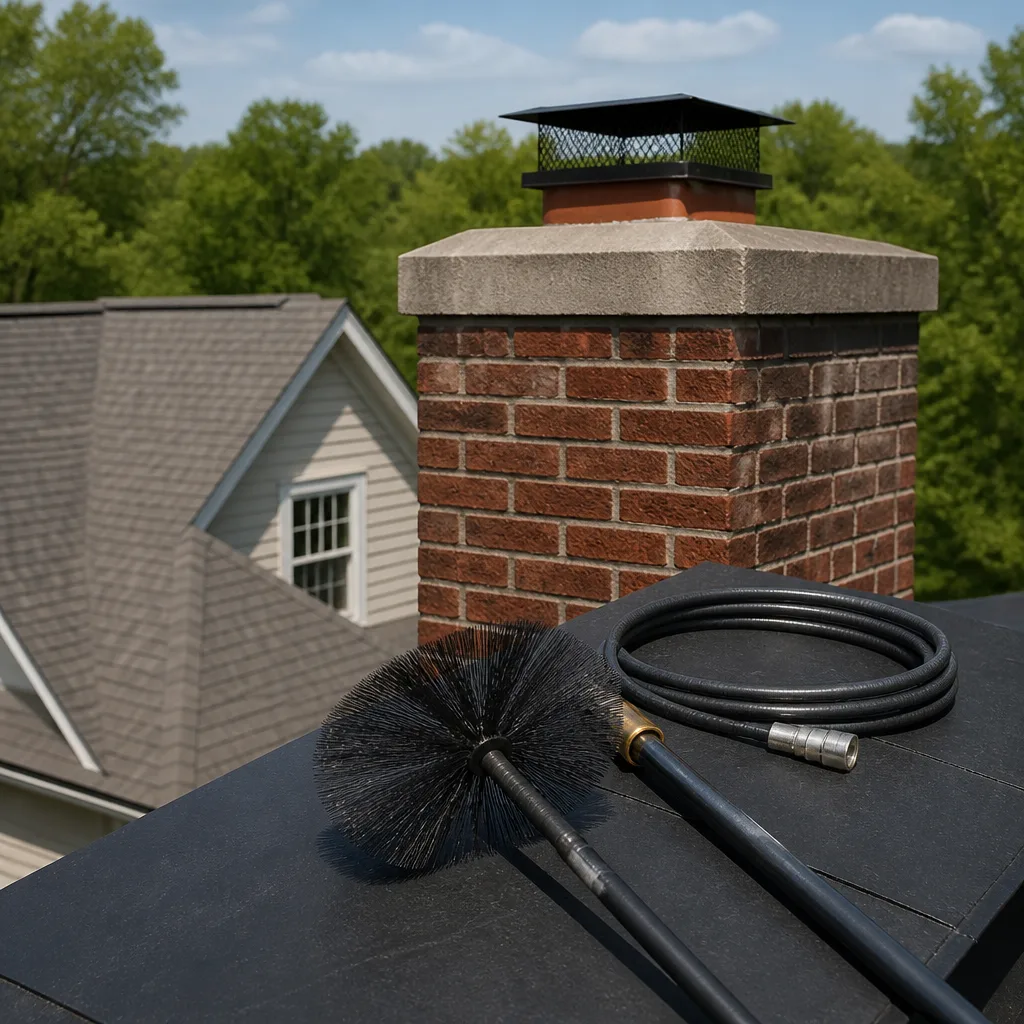 Sweep & inspection
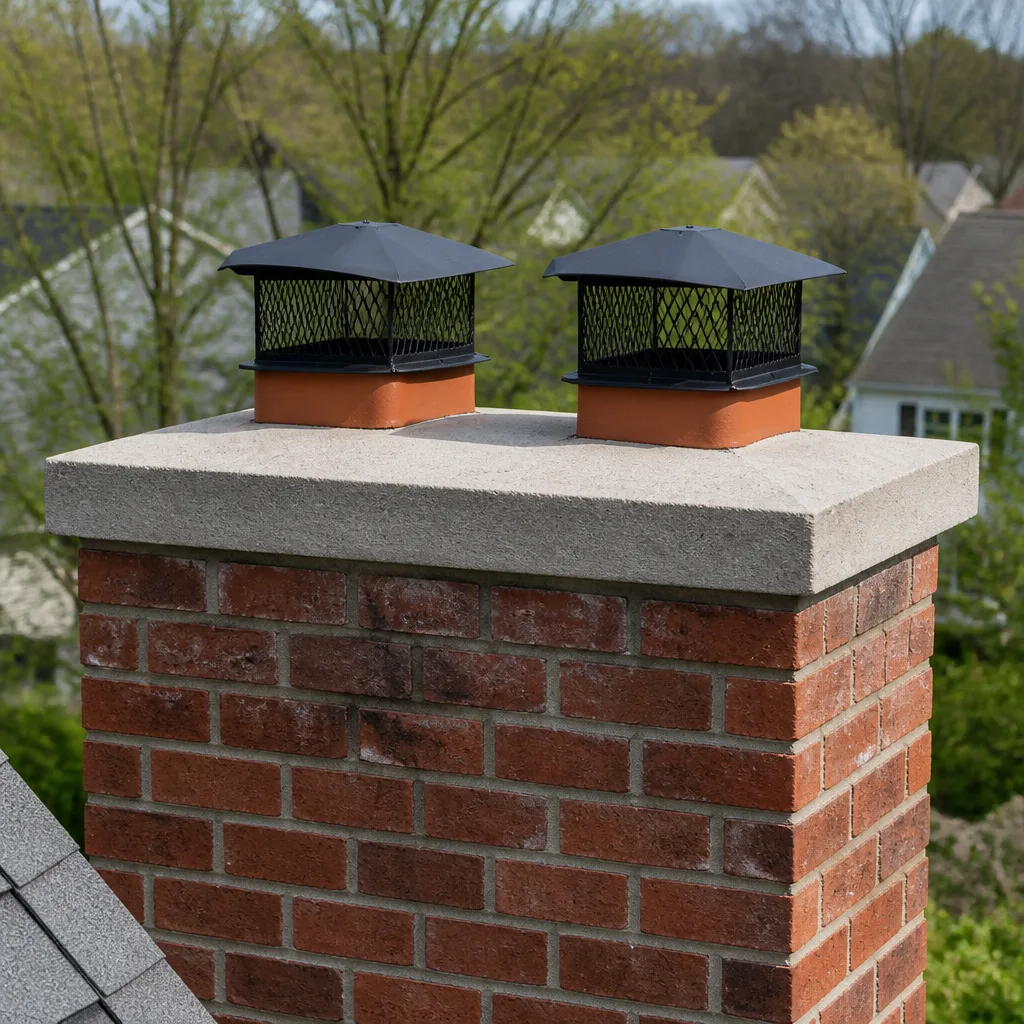 Caps & crowns
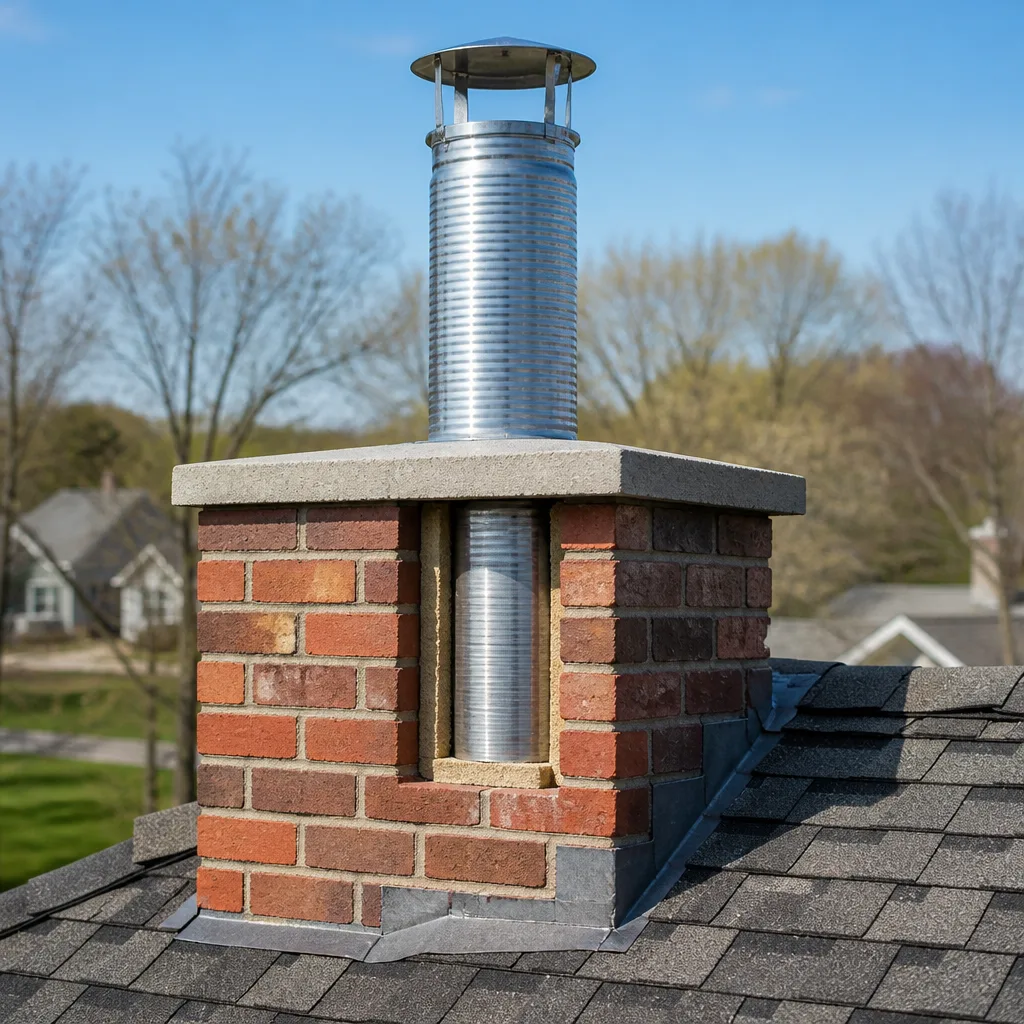 Flue relining
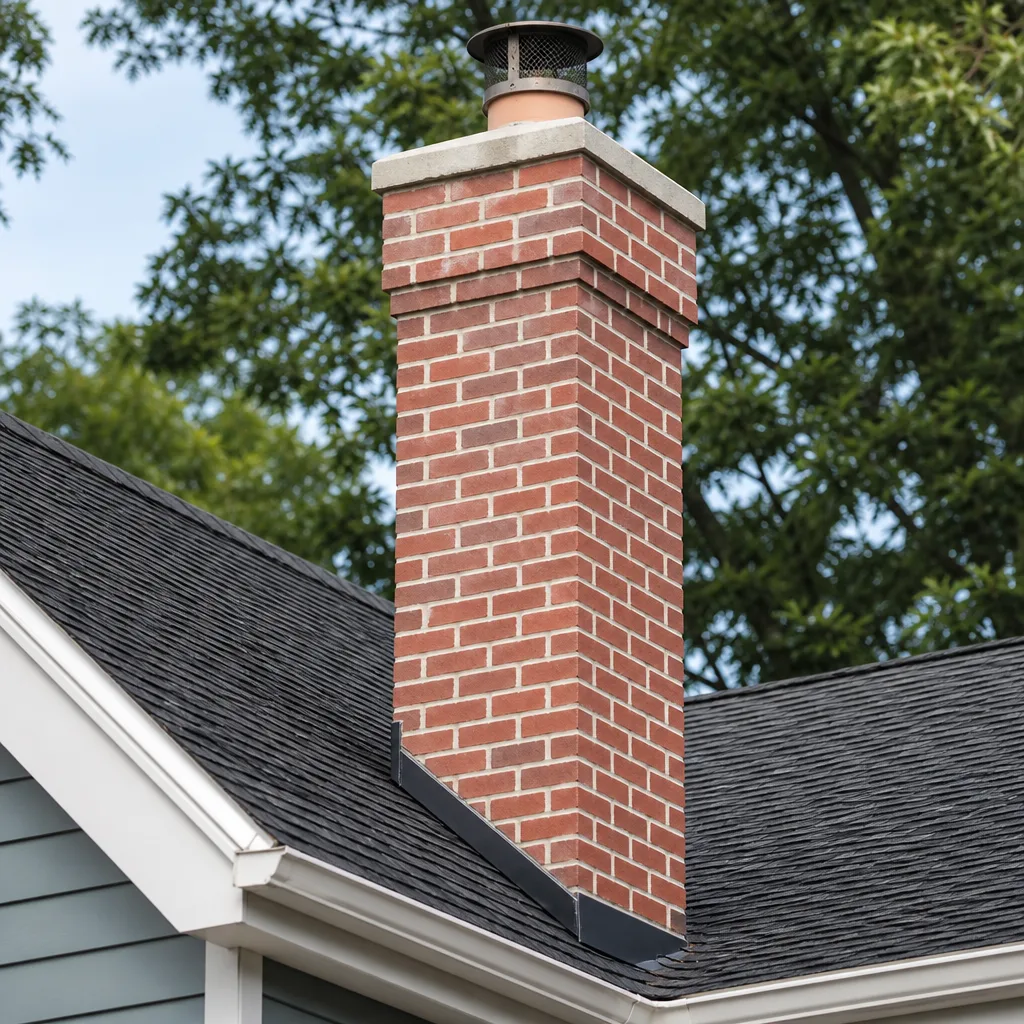 Masonry repair
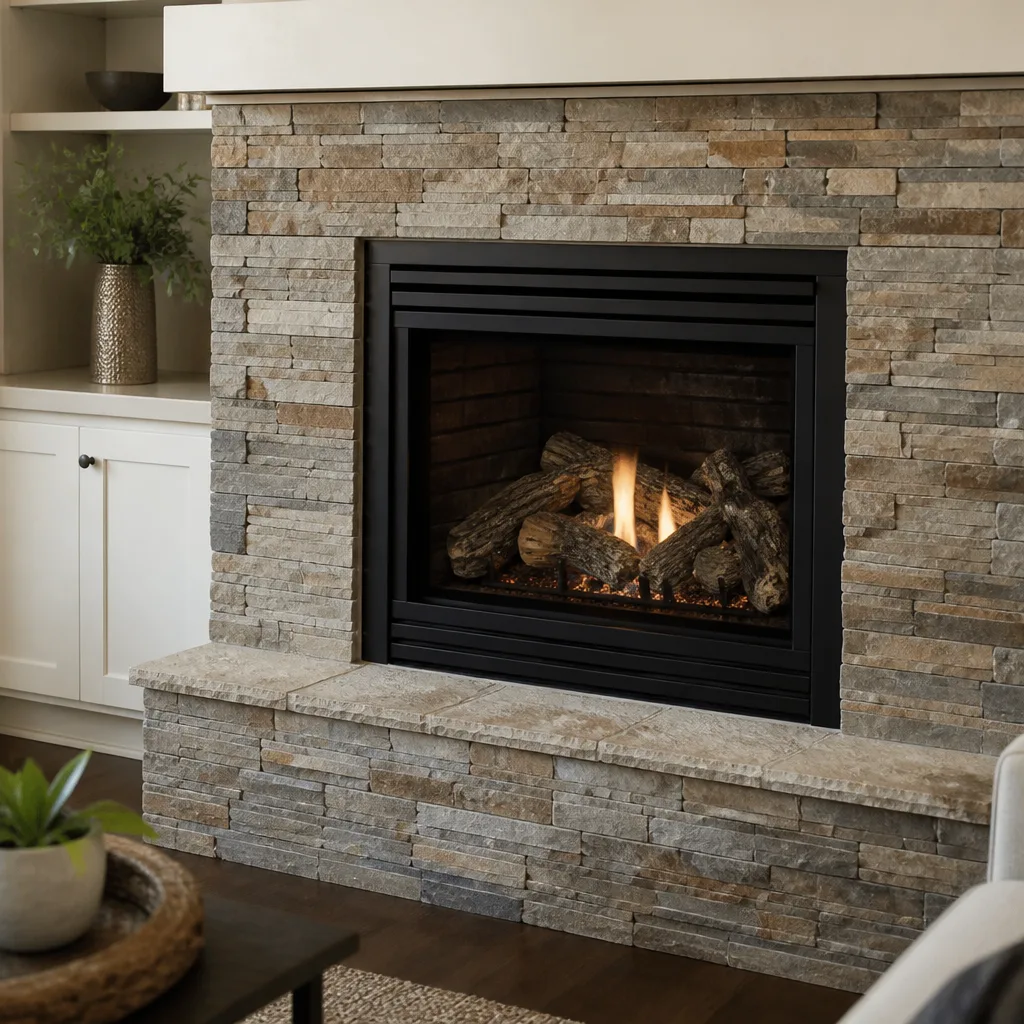 Gas fireplace service
Level 1 sweep and inspection to the NFPA 211 annual standard - flue, crown, cap, and flashing checked and photographed
Chimney sweep logs do not sweep chimneys. They loosen some creosote - which then falls where a brush and vacuum still have to collect it.
Chimney Cleaning Warning Signs: A Los Angeles Homeowner’s Reference Guide
Smoke drifting into your living room and a white stain creeping across your chimney’s exterior brick are both “warning signs” by any definition. But one is an active fire hazard that deserves a same-day response, and the other is a slow moisture problem you can schedule around. Treating both with equal urgency costs you either money or safety, and most warning-sign articles never tell you which is which. This guide sorts every chimney symptom Los Angeles homeowners face into three clear urgency tiers, explains what each sign actually means inside the flue, and tells you when to act, when to schedule, and when to simply take a photo and keep an eye on it. For a deeper dive, see The Complete Guide to Chimney Cleaning in Los Angeles. If you live in Los Angeles, from San Pedro up through the Valley, here’s what your chimney has been trying to tell you.
Styles & brands we work with
Quick Answer
Chimney warning signs in Los Angeles fall into three categories: signs that mean stop using the fireplace immediately, signs that mean schedule a professional inspection within about 30 days, and signs you can monitor on your own until your next routine sweep. The most urgent signs include smoke entering the room, a strong creosote or gas odor, visible flames behind the damper, or a chimney fire you’ve already experienced. Less urgent but still important signs include white staining (efflorescence), crumbling mortar joints, cracked crown surfaces, or a damper that’s stiff to operate. Knowing which tier a sign belongs to saves you from either ignoring a real hazard or paying for an emergency call on a cosmetic issue.
Table of Contents
- Tier One: Stop Using the Fireplace Now
- Tier Two: Schedule Within 30 Days
- Tier Three: Monitor and Mention at Next Inspection
- Los Angeles Warning Signs Other Guides Miss
- What Chimney Odors Actually Tell You
- Drafting Problems vs. Structural Problems: Reading the Smoke
- How to Document a Warning Sign for a Remote Assessment
- Common Mistakes to Avoid
- When to Call a Professional
- Frequently Asked Questions
- The Bottom Line
Tier One: Stop Using the Fireplace Now
These signs indicate a condition that could cause a chimney fire, carbon monoxide exposure, or structural failure during your next burn. If you notice any of the following, close the damper, don’t light another fire, and call a professional chimney sweep in Los Angeles before using the fireplace again.
Smoke entering the living room during a fire
This is the sign we hear about most often from Los Angeles homeowners, and it’s one that should never be ignored. Smoke in the room means combustion gases are not drafting up the flue the way they should. That could be a simple fix (a partially closed damper, a bird nest near the top, a cold flue on a damp morning) or a serious one (a cracked flue liner, a blocked flue, or a chimney that’s simply too short for the roofline). The problem is that you can’t tell which from the couch. Carbon monoxide is colorless and odorless, and a draft problem that sends visible smoke into the room is also sending invisible gases there too. Stop using the fireplace and get a Chimney Inspection in Los Angeles before the next fire.
Strong creosote smell, even when the fireplace is cold
Creosote smells like a mix of tar, asphalt, and campfire smoke. A faint whiff after a heavy burning season is normal. A strong, persistent odor that you notice when the fireplace has been cold for days is not. It usually means creosote has built up to a dangerous thickness inside the flue. Creosote is the byproduct of wood smoke condensing on the flue walls. In the mild coastal air of Los Angeles, chimneys that burn unseasoned wood or that don’t get hot enough during a fire can accumulate creosote faster than you’d expect. Thick creosote is fuel. If it ignites, you have a chimney fire that can crack flue tiles, melt mortar, and spread to the house. A strong creosote smell means it’s time for a professional cleaning before another spark goes up that flue.
You’ve already had a chimney fire
Chimney fires don’t always announce themselves dramatically. Many are slow-burning and quiet, sounding like a low rumble or a freight train in the distance. Some homeowners don’t realize they’ve had one until a Chimney Sweep in Los Angeles points out the evidence: puffed or honeycombed creosote, cracked flue tiles, warped damper components, or discolored metal at the chimney cap. If you suspect you’ve had a chimney fire, even a small one, the fireplace is out of service until a professional inspects the flue. A chimney fire can crack the liner in ways that aren’t visible from the firebox, and the next fire could find its way through those cracks into the framing of the house.
Visible flames or glowing material behind the damper
If you can see flames licking above the damper or glowing embers in the smoke chamber while the fire is going, the fire is higher in the chimney than it should be. This can mean the firebox is overfilled, the damper is malfunctioning, or there’s already a creosote ignition happening in the flue. Shut the damper if you safely can, evacuate if the fire is spreading, and call 911 first if you see flames outside the firebox. Once the situation is under control, schedule an inspection before burning again.
Tier Two: Schedule Within 30 Days
These signs don’t require you to stop using the fireplace immediately, but they indicate conditions that will worsen with time and weather. Address them within about a month to avoid a Tier One situation later.
White staining on exterior brick (efflorescence)
That chalky white film on the outside of your chimney is efflorescence, and it’s exactly what the name suggests: minerals from inside the masonry being pushed to the surface by water. It tells you water is moving through the brick and mortar, and in Los Angeles, that’s often caused by rain, irrigation overspray, or coastal moisture working its way into the chimney structure. Efflorescence itself is cosmetic and harmless, but the water that causes it is not. Over time, the moisture weakens mortar joints, spalls the brick face, and can rust the steel components inside the flue. You have time to schedule this one, but don’t let it sit through another rainy season. A professional can identify the water source, repair the mortar, and often fix the issue before it becomes structural.
Crumbling or missing mortar joints
Run your hand along the mortar joints on your chimney (or look closely at photos if you don’t have roof access). If the mortar is sandy, crumbling, or missing in places, the chimney structure is slowly losing its integrity. Mortar is the glue holding the brick or stone together. In a seismically active city like Los Angeles, where the ground shifts in small ways all the time, weak mortar joints are more vulnerable during earthquakes and high winds. Repointing (replacing the mortar) is a standard repair that a chimney sweep can assess and often complete affordably. Left alone, though, the bricks begin to shift, and you’re looking at partial rebuilds instead of joint work.
Damper that’s stiff, stuck, or won’t fully close
A damper that’s hard to operate is usually one of three things: rust from moisture, creosote buildup gumming the pivot points, or warping from heat. All three are fixable, but none improve with use. A damper that won’t fully close when the fireplace is cold lets conditioned air escape up the flue year-round, which means higher heating and cooling bills in Los Angeles homes. A damper that won’t fully open when you’re burning means smoke rolls into the room. If yours is fighting you, that’s a 30-day fix. In our experience, most damper repairs are simpler than homeowners expect, and some are as straightforward as cleaning and lubricating the mechanism.
Rust on the damper, firebox walls, or chimney cap
Rust anywhere in the chimney system means water is getting in somewhere it shouldn’t. A rusty damper after one rainy season in Los Angeles might just be from a missing or damaged chimney cap. Rust on the firebox walls after years of coastal air might be a flashing problem at the roofline. Either way, rust is the first visible sign of water intrusion, and water is the enemy of every chimney system. The fix is usually straightforward and often inexpensive if caught at the rust stage. Wait until the metal has rusted through, and you’re replacing components instead of sealing them.
Tier Three: Monitor and Mention at Next Inspection
These signs are worth watching and worth mentioning to your sweep at the next appointment, but they don’t require their own service call in most cases.
Faint smoke smell lingering for a day or two after a fire
This is often a drafting quirk rather than a system failure. A flue that’s cold from overnight coastal air drafts more slowly when you first light a fire. A mild smoke smell that disperses within 24 to 48 hours after the fire is out is common, especially in older Los Angeles homes with original chimneys. If the smell persists longer than that, or if you notice it every single time you burn, move it up to a Tier Two concern and schedule a look. But the occasional faint whiff after a heavy burn is not, by itself, a warning sign that requires action.
Hairline cracks in the firebox brick
Firebox brick expands and contracts with every heating and cooling cycle. Over years of use, tiny hairline cracks in the firebrick or mortar are normal wear and tear. They’re not a structural emergency, and in most cases they don’t affect safety. The time to act is when the cracks widen beyond a hairline, when pieces of brick start coming loose, or when you can see daylight through a crack from inside the firebox. Until then, note it and mention it at the next sweep appointment so the technician can check for any hidden issues behind the brick.
Small amounts of soot falling into the firebox
Soot dropping into the firebox between fires usually means creosote or soot has built up along the flue walls and is flaking off with temperature changes. If you only burn a few fires a year in Los Angeles, a little soot is normal. But if you’re seeing more than a light dusting, or if the soot is sticky and tar-like rather than dry and powdery, that’s a creosote signal worth moving to the Tier Two list. Otherwise, keep the firebox swept clean and mention it at the next Chimney Sweep in Los Angeles appointment.
Los Angeles Warning Signs Other Guides Miss
Most chimney warning sign articles are written generically, as if every chimney sits in the same climate and faces the same conditions. Los Angeles is different in three ways that create specific warning signs you won’t find in a national guide.
Cracked crown after earthquake activity
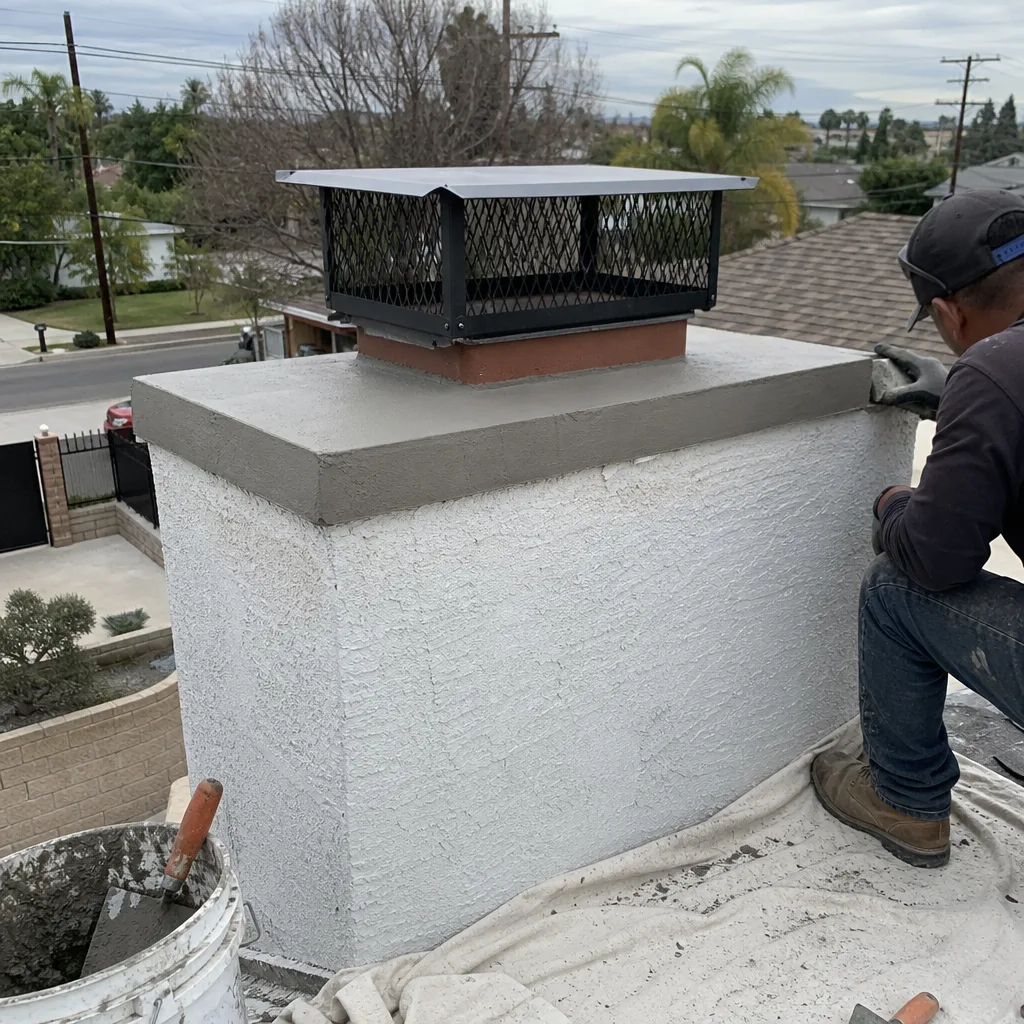
The chimney crown is the concrete slab that caps the top of the chimney, sealing the top of the masonry from weather. In Los Angeles, even a small earthquake can crack a crown that was already weakened by years of sun and moisture. A cracked crown lets water into the chimney chase, which then works its way into the flue and the house. After any earthquake strong enough to rattle the windows, take a look at your chimney crown (or have someone do it safely from the roof or with binoculars from the ground). Hairline crown cracks can be sealed. Large cracks or crumbling crown edges need repair. Both are far cheaper than the water damage they prevent.
Chimney cap displaced after Santa Ana winds
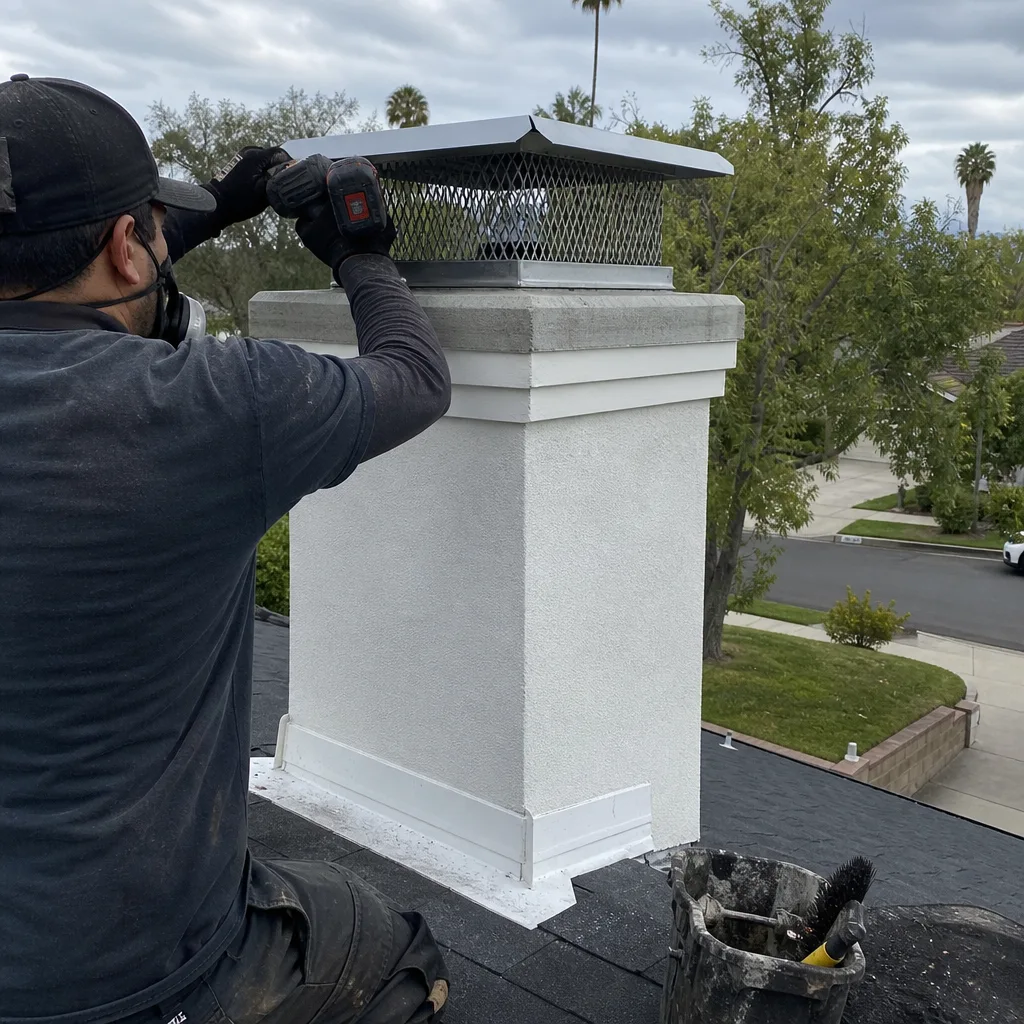
Santa Ana winds routinely gust past 40 and 50 miles per hour through the canyons and across the Valley. A chimney cap that’s loosely mounted, damaged by rust, or installed with deteriorating fasteners can shift or blow off entirely during those events. A missing or displaced cap is an open invitation for rain, debris, and animals. It also changes the draft dynamics of the flue, which can cause the smoke in the room problem we talked about earlier. After a big wind event in Los Angeles, if you can safely see your chimney cap from the ground, look for anything tilted, loose, or missing. If the cap is gone, that’s a Tier Two call: not an emergency, but not something to leave unprotected for long.
Spalling brick from irrigation water wicking
Spalling is what happens when water inside brick freezes, expands, or simply causes salt crystals to push the brick face off in flakes and chunks. In Los Angeles, we rarely see freeze-thaw spalling the way Midwestern chimneys do. What we see instead is irrigation water. Sprinklers that spray against the chimney base over months and years keep the masonry saturated, and the constant wet-dry cycle pops the brick faces off. If your chimney sits near a lawn, planter, or sprinkler head, look at the bottom few feet of the chimney for spalling. Adjusting the sprinkler is step one. Repairing the damaged brick is step two. Both are worth doing before the damage works its way up the chimney.
What Chimney Odors Actually Tell You
Chimneys have a language, and a lot of it is spoken through smell. The specific odor coming from your fireplace tells you more than whether the last fire was oak or pine. Here’s how to read what you’re smelling.
Creosote smell (tar, asphalt, campfire)
This is the most common odor complaint we hear in Los Angeles, and it signals creosote buildup inside the flue. Creosote forms when wood smoke cools and condenses on the flue walls before it exits the chimney. The smell is strongest on humid days, which in Los Angeles means coastal fog mornings and post-rain stretches. As creosote accumulates, the smell gets stronger and more persistent. A faint smell that appears occasionally during burning season is one thing. A sharp, constant smell that hits you when you walk into the room, even with the damper closed, means the creosote layer is thick enough to be a fire hazard. That’s the time for a professional cleaning.
Animal decay smell (sweet, rotting, or dead)
A dead animal in the chimney smells like exactly what it is. Raccoons, squirrels, birds, and opossums all find their way into uncapped or poorly capped chimneys in Los Angeles, and some don’t find their way out. The smell is usually strongest at the firebox and will not go away on its own. Removing the animal and cleaning the flue is the only fix, and it needs to happen sooner rather than later, both for hygiene and because the remains can harbor bacteria and create secondary odors that linger for months. A properly fitted chimney cap with a spark arrestor prevents most animal entry.
Mildew or damp basement smell
A musty, damp smell from the fireplace usually means water is getting into the flue somewhere. In Los Angeles, the common causes are a missing chimney cap, a cracked crown, failed flashing at the roofline, or condensation inside an unlined flue. The smell is telling you the inside of the chimney is staying wet, and wet conditions accelerate masonry deterioration and rust metal components. You have time to address this one, but it won’t resolve on its own, and the damage compounds the longer the water source stays active.
Gas smell (rotten eggs or skunk)
Natural gas is odorless, so utility companies add mercaptan, which gives it the rotten-egg smell. If you smell gas coming from your fireplace, do not light anything, do not flip light switches, and leave the house. Call your gas utility’s emergency line from outside the home. A gas leak is not a chimney problem to fix during a regular sweep. Once the utility has cleared the property, a chimney professional can inspect the gas fireplace or gas starter system to identify the failed component.
Drafting Problems vs. Structural Problems: Reading the Smoke
When smoke enters your living room, the cause is either a drafting problem or a structural problem, and the two carry very different price tags. Knowing how to tell them apart, even roughly, helps you understand what you’re dealing with before you pick up the phone.
Drafting problems (usually fixable cheaply)
A drafting problem means the chimney isn’t pulling combustion gases up and out efficiently. Smoke backs up into the room because the flue isn’t drawing. The common causes are:
- A damper that isn’t fully open, or a damper plate that’s warped and restricting airflow
- A flue that’s cold and needs to be primed (common in Los Angeles on cool, damp mornings, especially in coastal neighborhoods like Playa del Rey or San Pedro)
- A bird nest, debris, or creosote buildup restricting the flue opening
- A chimney that’s too short for its roofline, which we see in some older hillside homes where additions have changed the roof geometry
- Negative air pressure inside the house from exhaust fans, tight windows, or competing appliances
Drafting problems are usually resolved with a cleaning, a damper adjustment or replacement, a chimney cap replacement, or a change in how the homeowner starts the fire. None of these require major reconstruction.
Structural problems (require professional assessment)
A structural problem means the flue itself or the surrounding masonry has failed in some way. The signs are different from a simple drafting issue:
- Smoke enters the room on every fire, regardless of outside temperature, priming, or damper position
- Smoke also enters rooms adjacent to the chimney, not just the fireplace room
- You can hear or feel air moving through cracks in the masonry, or see smoke escaping through exterior brick joints while a fire is burning
- A chimney inspection with a camera reveals cracked flue tiles, gaps between tile sections, or a missing liner entirely
- You see water staining on walls or ceilings near the chimney
Structural problems often require flue liner repair or replacement. In Los Angeles, many homes built before the 1960s have chimneys with no clay liner at all or liners that have cracked after decades of use and seismic movement. The repair options today are better than they were, including stainless steel liners and cast-in-place lining systems. A reputable Fireplace Repair in Los Angeles company will show you the camera footage and explain exactly what’s needed and what can wait.
How to Document a Warning Sign for a Remote Assessment
A good photo and an accurate description can help a chimney professional assess your situation before anyone drives out to the house. Here’s how to document what you’re seeing so you get a straight answer on the phone or by email.
- Take photos from multiple angles. For exterior chimney issues, stand at least 20 feet away and photograph the full chimney from ground level. Then take close-ups of the specific issue: the cracked crown, the spalled brick, the rusted cap. For interior issues, photograph the firebox, the damper from below, and any visible flue area above the damper.
- Photograph in daylight, not at dusk. Natural light shows cracks, staining, and rust far better than flash or dim evening light. If you can, photograph on a clear day.
- Note when you first noticed the sign. Saying “I noticed the white staining in November after the first big rain” tells us more than “there’s white stuff on the chimney.” Timing correlates with weather events and helps identify the water source.
- Describe the smell, if there is one, using the words from this guide. Saying “it smells like tar on humid mornings” is far more useful than saying “it smells weird.” The specific odor language points directly to the likely cause.
- Include a measurement or reference object. A photo of a crack with a quarter or a ruler next to it gives scale. A photo of the full chimney with a car or fence in frame helps us understand the overall size and condition.
- Describe any recent weather or events. Mention the Santa Ana windstorm, the earthquake, or the sprinkler change. Los Angeles weather and seismic events correlate strongly with chimney damage, and knowing what happened right before you noticed the sign narrows the diagnosis significantly.
When you call a chimney company, these details mean the difference between a vague answer (“sounds like it could be a few things”) and a useful one (“that sounds like efflorescence from an irrigation overspray; here’s what we’d do about it”).
Common Mistakes to Avoid
- Ignoring Tier One signs and “seeing how the next fire goes.” We’ve talked to Los Angeles homeowners who burned with smoke entering the room for an entire season before calling. By then, the creosote buildup was severe, and the flue had damage that could have been prevented. If it’s a Tier One sign, stop using the fireplace and get it checked.
- Treating a cosmetic sign like an emergency and paying rush fees. Efflorescence, hairline cracks, and minor soot are not emergencies. Scheduling these during a normal appointment window saves money and gets the same result. Knowing which tier a sign belongs to prevents overpaying for urgency you don’t need.
- Assuming a new house has a safe chimney. We inspect chimneys in Los Angeles homes that are five years old and find installation errors, and we inspect chimneys in homes that are fifty years old and find them in excellent shape. Age alone tells you nothing. The only way to know is to look inside.
- Painting over efflorescence or sealing it without fixing the water source. Painting a water problem doesn’t stop the water. It traps moisture inside the masonry and accelerates the damage while hiding the visible warning sign. Fix the water first, then address the cosmetic surface.
- Never having the chimney inspected because “we don’t use it much.” In Los Angeles, many homeowners use their fireplaces only a few times a year, and they assume light use means no maintenance needed. But unused chimneys still get water intrusion, animal entry, and weather damage. The inspection interval isn’t based on how often you burn; it’s based on the fact that the chimney is outside in the weather year-round.
- Hiring a sweep over the phone based on the lowest quote without seeing work history. The chimney trade has a reputation problem nationwide, and Los Angeles is no exception. A price quoted over the phone that doubles at the door is a common story. Any reputable chimney company will give you a written price before starting work and stand behind the work in writing.
When to Call a Professional
Call a professional if you have any Tier One sign (smoke in the room, strong creosote odor, a past chimney fire, or flames above the damper), any Tier Two sign that has been present for more than a month, or any sign you can’t confidently identify after reading this guide. Use our Chimney Sweep Maintenance Checklist for Los Angeles Homeowners to stay ahead of problems. You should also call if you’ve never had the chimney inspected since buying the home, regardless of whether you’ve noticed any warning signs. A chimney that hasn’t been inspected is an unknown, and unknowns are where the expensive surprises live. Ashby Chimney Los Angeles offers free estimates in Los Angeles. Call (213) 652-7061 and we’ll talk through what you’re seeing, help you identify which tier it falls into, and give you a straight answer about what needs to happen next.
Frequently Asked Questions
Most Los Angeles homeowners should have their chimney swept and inspected once a year, regardless of how often they burn. The National Fire Protection Association recommends annual inspection and cleaning as needed, and that guidance applies to mild-climate cities just as much as cold ones. If you burn more than two cords of wood in a season, you may need a mid-season sweep. If you burn rarely, an annual inspection still matters because the chimney has been outside in Los Angeles weather all year.
In the Los Angeles market, a standard chimney sweep typically runs between $180 and $350 depending on the size and condition of the flue, the level of creosote buildup, and whether any repairs or component replacements are needed during the visit. Every job at Ashby Chimney Los Angeles gets a written price before any work starts, so the number on the invoice matches the number we quoted at the door. Call (213) 652-7061 for an exact quote based on your fireplace.
Creosote smells like a combination of tar, asphalt, and heavy campfire smoke. The odor is strongest on humid or damp days because moisture amplifies the volatile compounds in the creosote. A faint creosote smell during or shortly after burning season is common. A sharp, persistent smell when the fireplace is cold is a sign of heavy buildup that increases chimney fire risk and warrants a professional cleaning.
Not necessarily. Many Los Angeles homeowners are told they need a new liner when the existing one actually has years of service left or needs only a targeted repair. That’s why we show every customer the camera footage from their flue before recommending any liner work. You should see the evidence for yourself. If a liner replacement is genuinely needed, modern stainless steel systems from manufacturers like DuraFlex and Olympia Chimney are durable, code-compliant solutions. But no reputable company should recommend a liner replacement without showing you why.
If you skip chimney maintenance, the most likely outcomes are increased creosote buildup (which becomes a fire risk), water damage to masonry and metal components (which becomes increasingly expensive to repair), and undetected deterioration of the flue liner (which becomes a carbon monoxide exposure risk). The damage compounds over time, and the repair bill grows faster than the problem. A $200 sweep today prevents a $1,500 repair in three years, and a $1,500 repair today prevents a $6,000 rebuild in ten. Chimney maintenance is one of the few home services where the math is this straightforwardly in your favor.
At Ashby Chimney Los Angeles, our phones are answered by a live person 24 hours a day, 7 days a week. When you call (213) 652-7061, you’ll talk to someone who can help you assess the urgency of what you’re seeing, schedule an appointment at a time that works for you, and give you a clear window for when a technician will arrive. We won’t promise a same-day emergency sprint every time, because most chimney issues in Los Angeles don’t actually require one. What we will do is give you an honest answer about how quickly your specific issue needs attention and get you scheduled accordingly.
The Bottom Line
Most chimney warning signs in Los Angeles are manageable if you know which ones need fast attention and which ones don’t. Smoke in the room, strong creosote smell, or evidence of a past chimney fire means stop using the fireplace and get it inspected before the next fire. White staining, crumbling mortar, or a stiff damper means schedule a visit within a month. Hairline cracks, faint post-fire smells, and light soot mean keep an eye on it and mention it at your next appointment. Document what you see with good photos and specific descriptions, and you’ll get better answers faster. For more guides & resources, visit our blog. And if you’re not sure which tier a sign belongs to, call (213) 652-7061. We’ve been serving Los Angeles since 2002, and we’d rather talk you through it on the phone than have you guessing about safety.
Written by Nathan Corliss, Owner at Ashby Chimney Los Angeles, serving Los Angeles since 2002.
See the difference
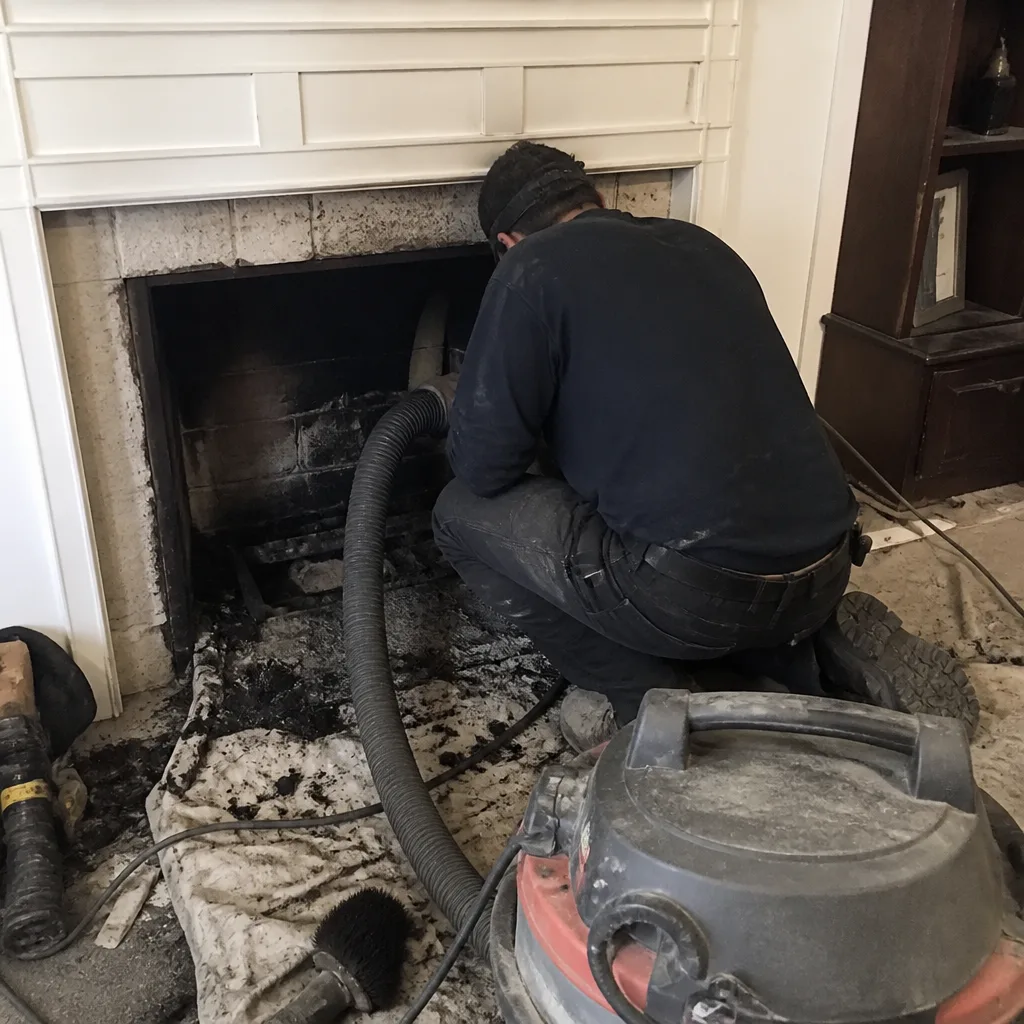 Before
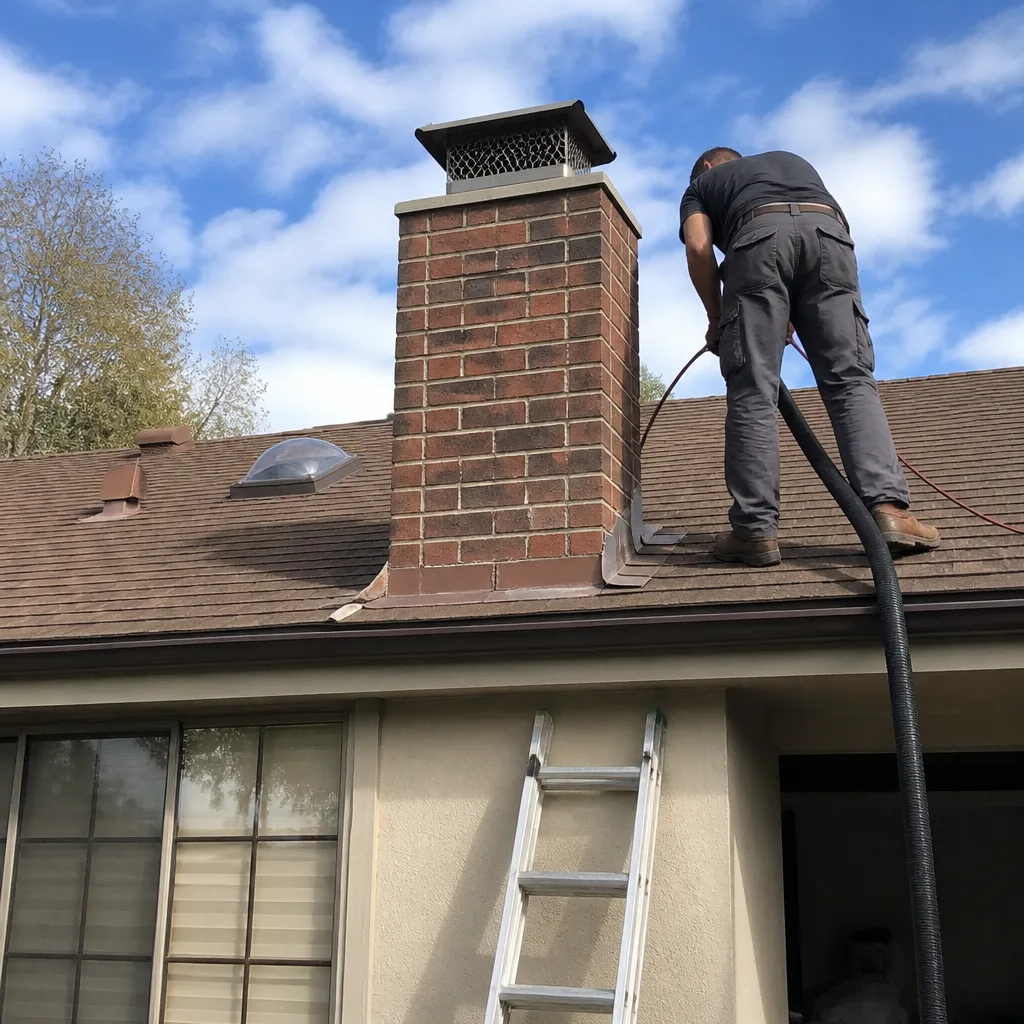 After
After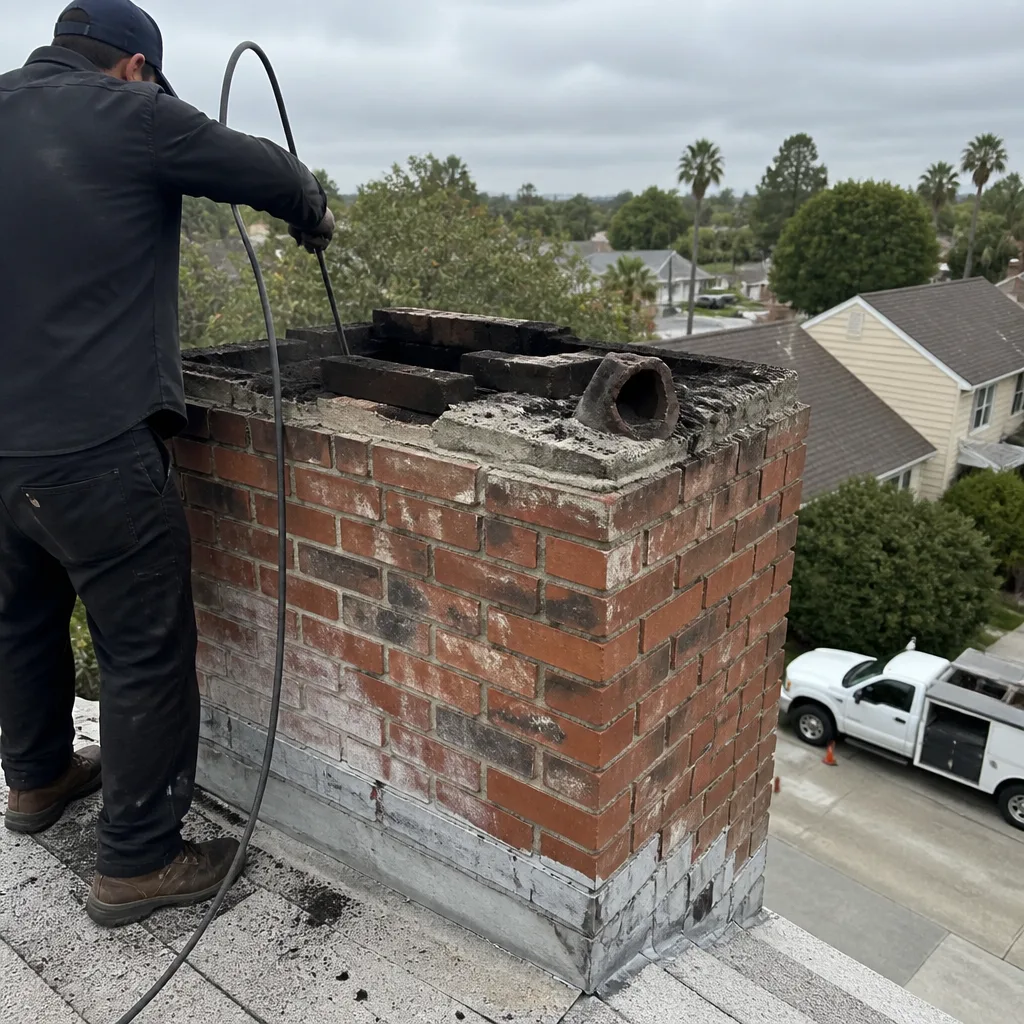 Before
 After
After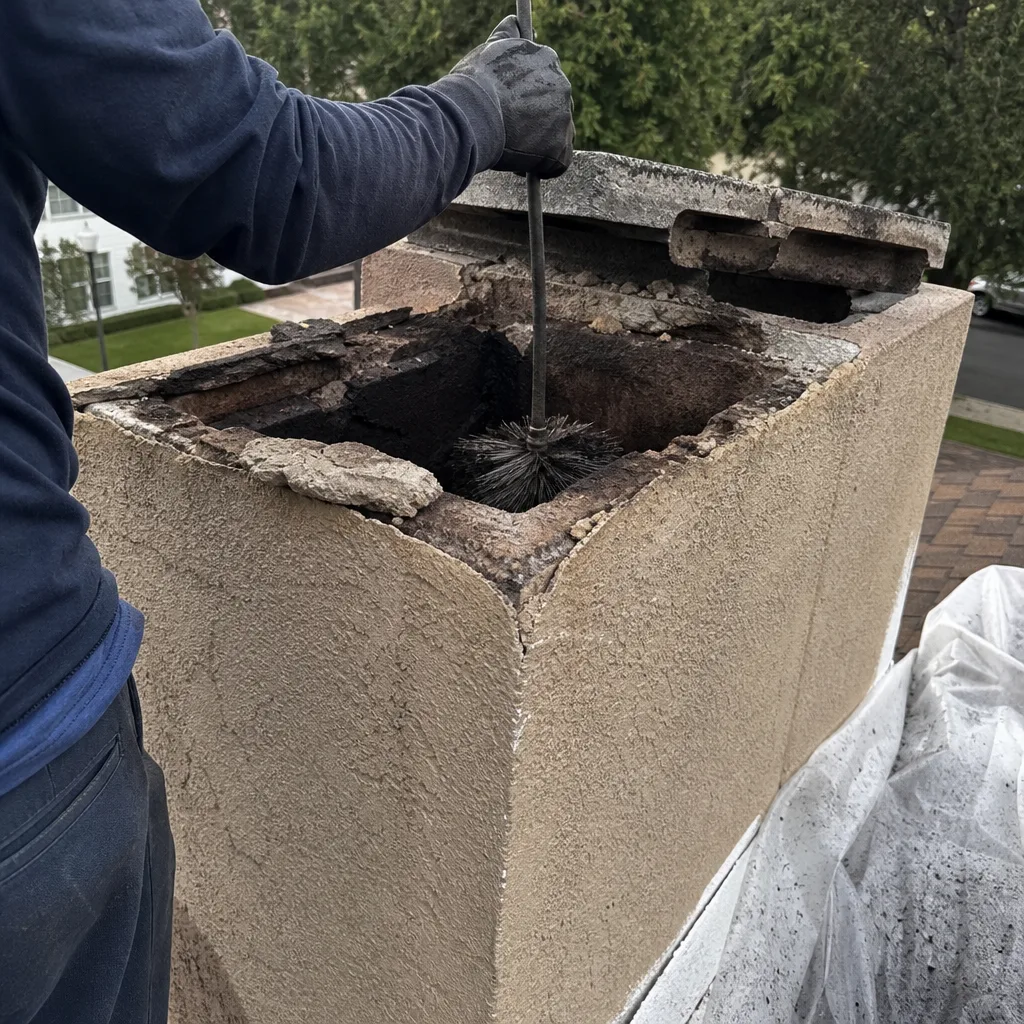 Before
 After
After